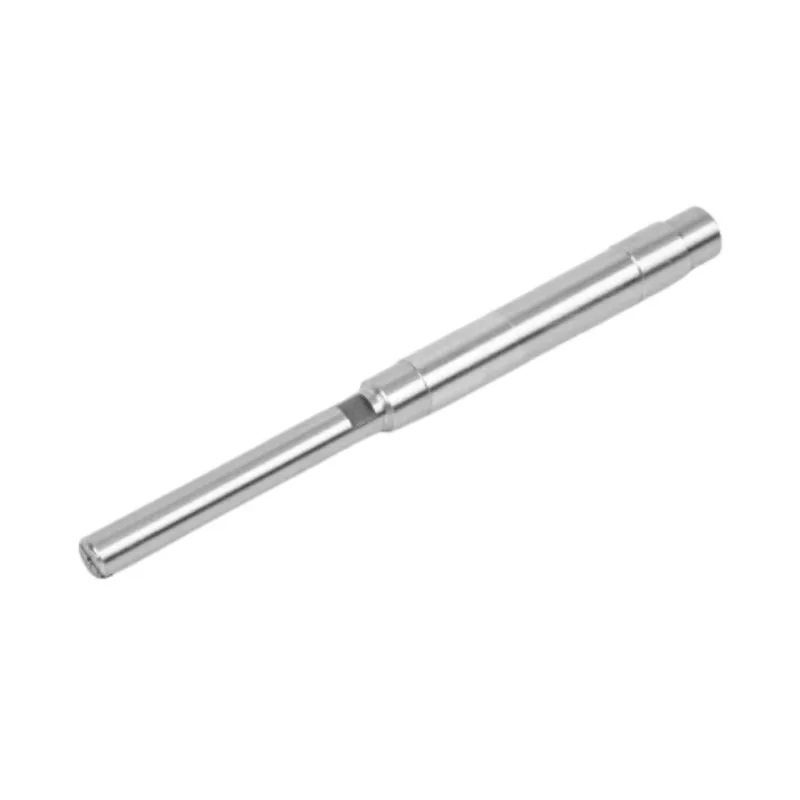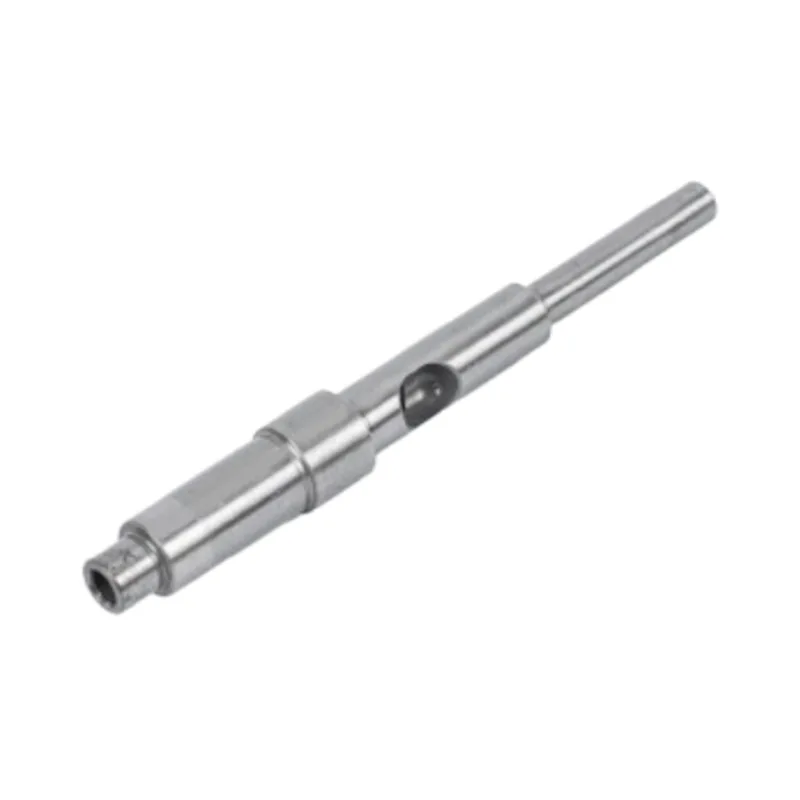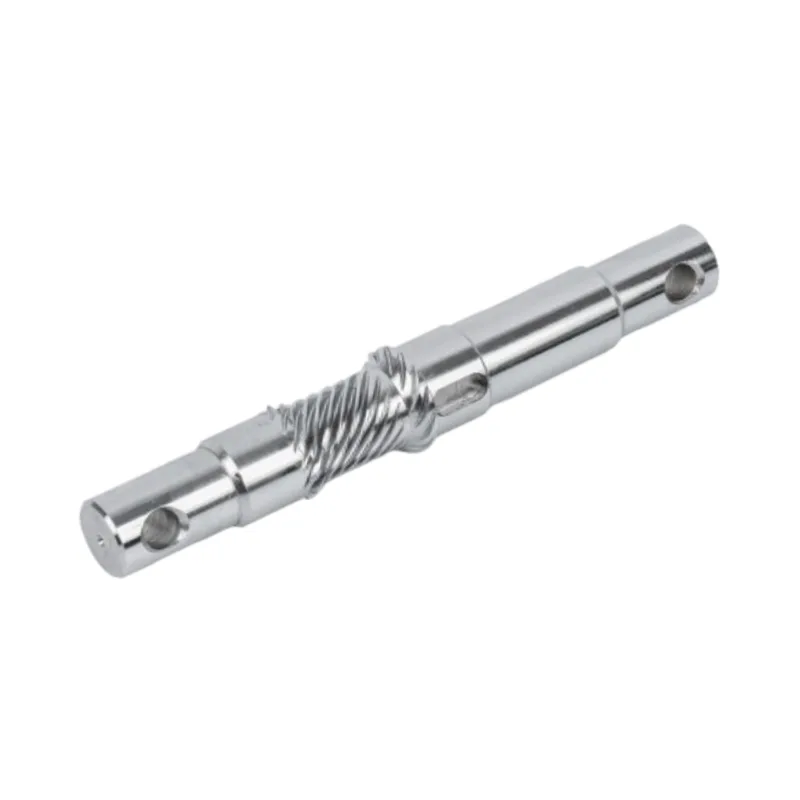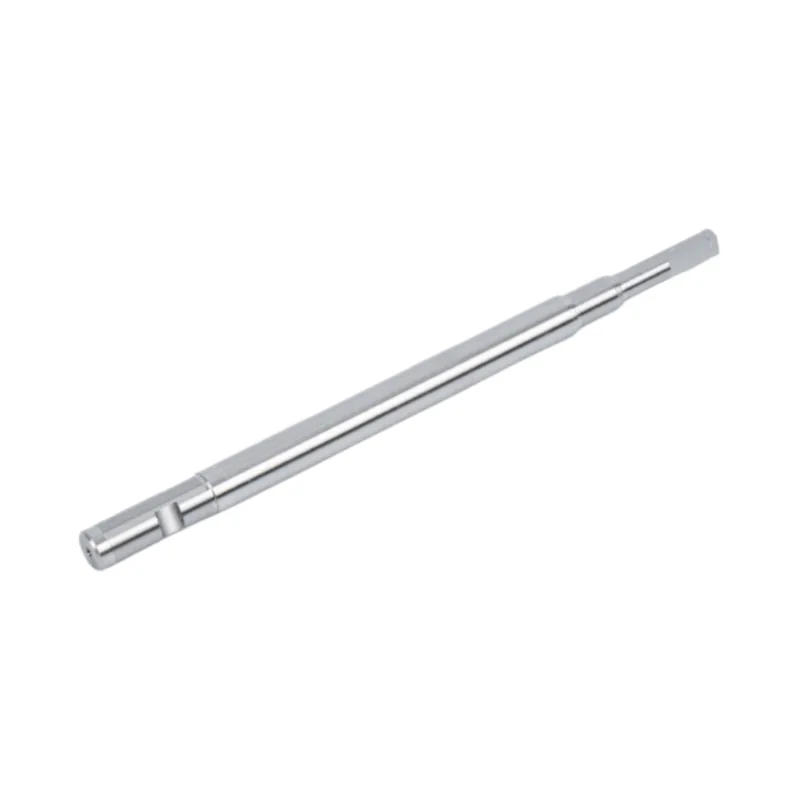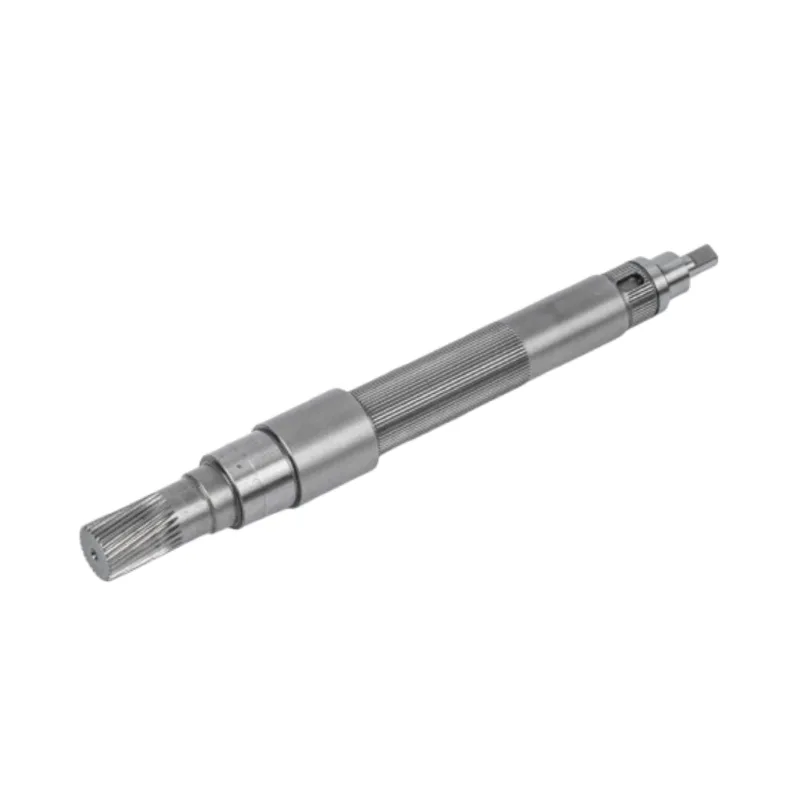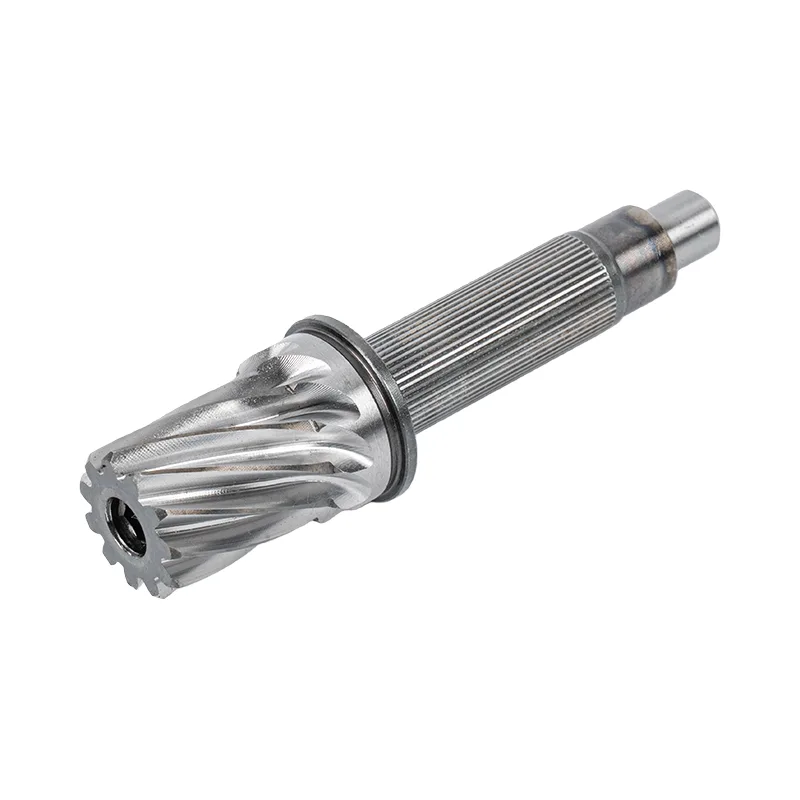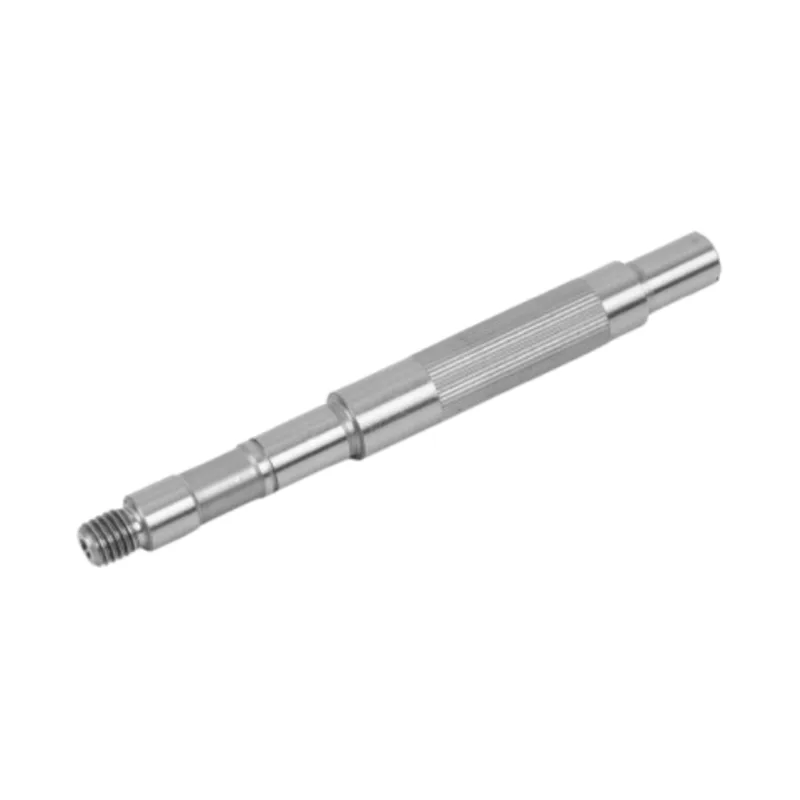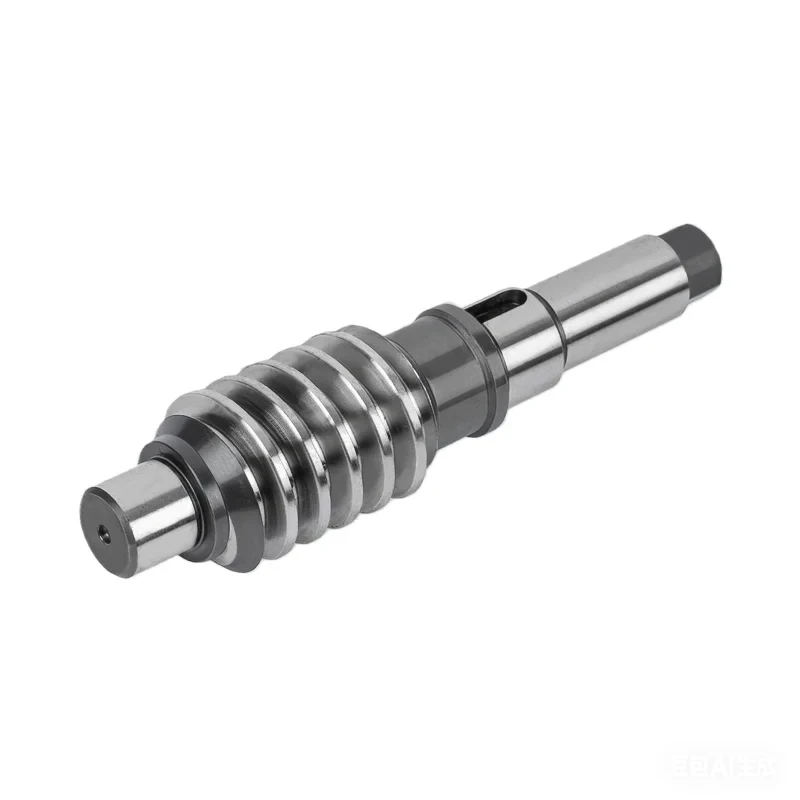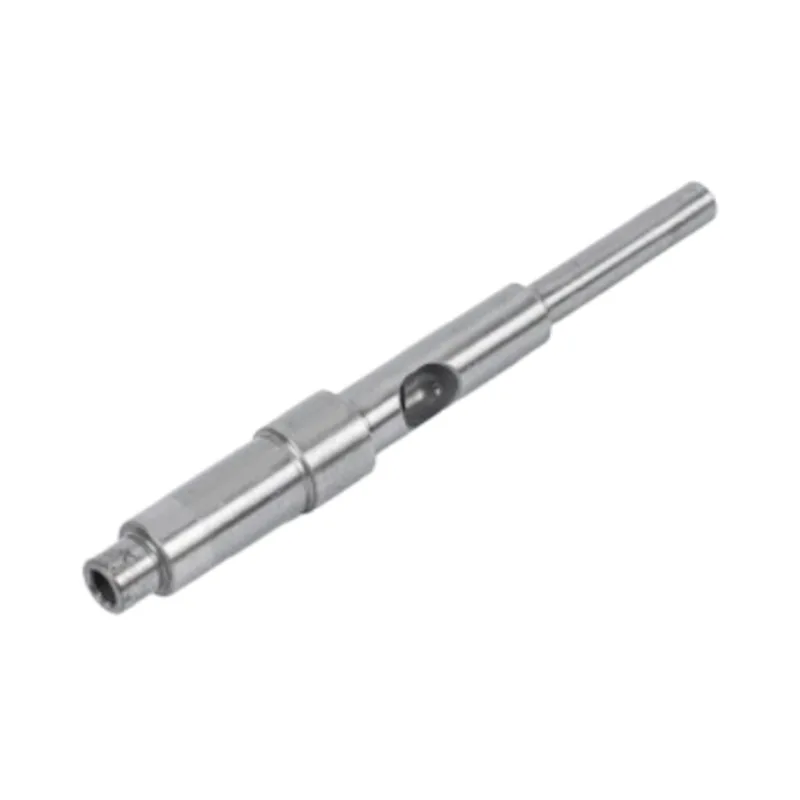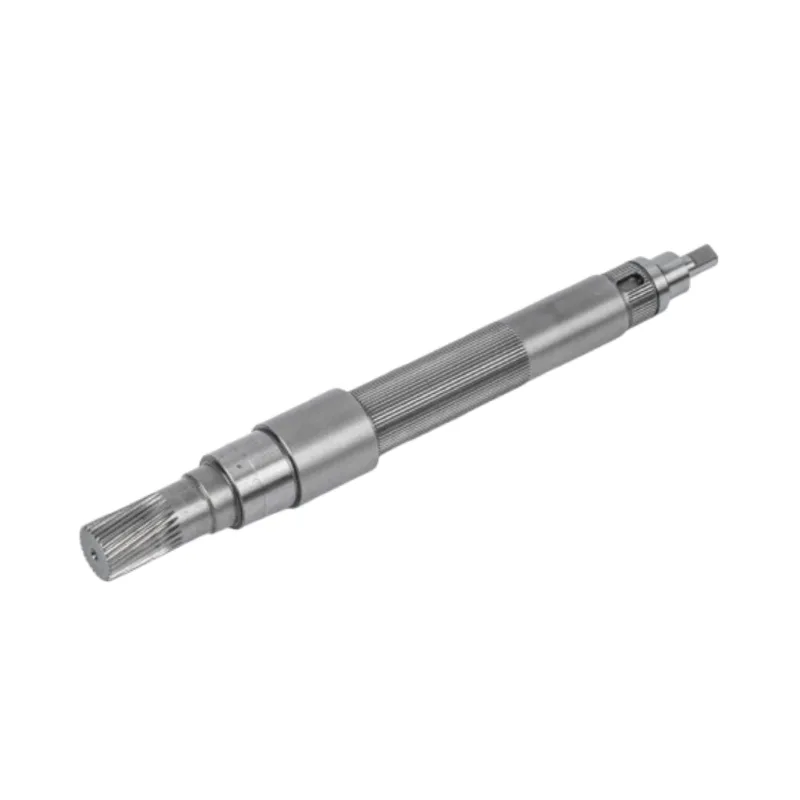

In a pump or a fan, the motor shaft only has to deliver torque. In a servo drive, a robot joint, or a CNC axis, it also has to deliver position. A few microns of runout at the shaft becomes a visible error at the end of a robot arm, and a whine the operator hears all shift. That difference changes which specs matter. This guide covers the shafts Guanshuo builds for automation, and the numbers that separate them.
A general industrial shaft is specified for strength. Will it carry the torque, and will it last? An automation shaft has to answer two more questions before those.
The first is positional. A servo system closes its loop on an encoder at one end of the shaft, but the work happens at the other end. Any runout, any eccentricity, any wind-up between those two points is error the control system cannot see and cannot correct. The shaft has to be true enough that the encoder's reading is honest.
The second is acoustic. Automation cells run beside people. A shaft that is slightly out of balance turns into audible whine at speed, and into vibration that shortens bearing life. Balance grade is a specification here, not an afterthought.
Four numbers do most of the work on an automation shaft drawing. These are the values Guanshuo holds in production.
Coaxiality is the one buyers underspecify most often. It describes how well every diameter shares a single axis. On a servo shaft, the encoder seat, the bearing journals, and the output taper all have to agree on where the centre is. If they disagree by more than a few microns, the motor fights itself.
Runout at the shaft does not stay at the shaft. On a robot arm, an error at the joint is multiplied by the reach of the arm. This is why joint shafts are specified far tighter than the end-effector tolerance suggests. The shaft budget has to be a fraction of the system budget.
A servo motor shaft is built around the interface at its output end. Guanshuo machines these with a standard 1:10 taper, internal threads from M4 to M12, and end chamfers of C0.5 to C2. The taper and drawbolt give a stiff, backlash-free connection, which is what a positioning system needs. A keyed hub with clearance would give the servo something to hunt against.
The route is CNC turning followed by ultra-fine grinding, which brings coaxiality to ≤0.005 mm, then G1 dynamic balance correction. Three surface strengthening options are available: surface quenching, nitriding, and chrome plating.
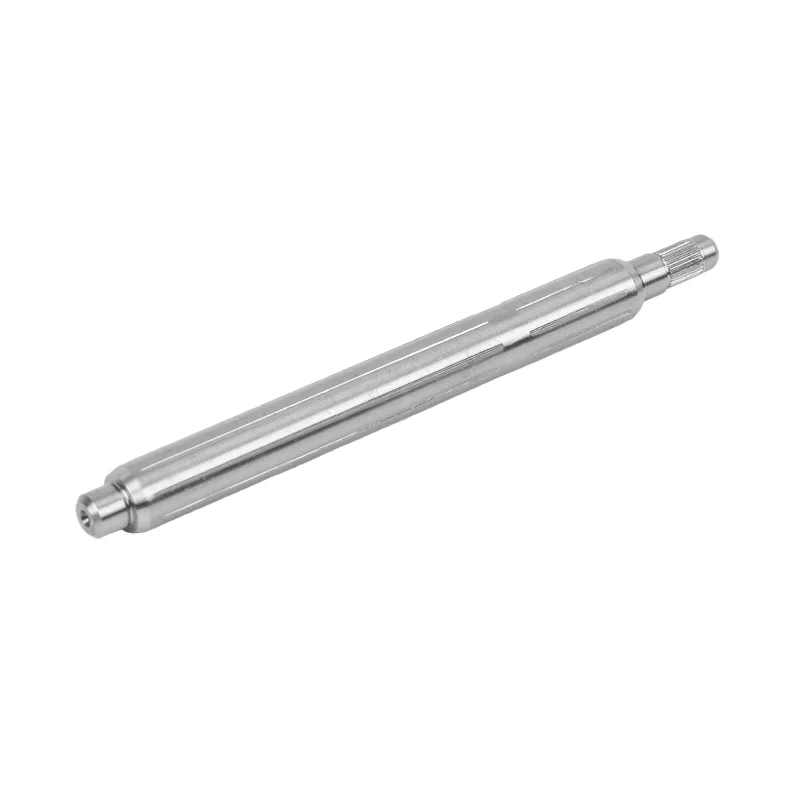
Stepper shafts serve open-loop motion, so there is no encoder correcting for error. That sounds like it should demand tighter specs, but the duty is lighter and the speeds are lower, so the practical requirement relaxes.
| Spec | Stepper shaft | Servo shaft |
|---|---|---|
| Runout | ≤0.01 to 0.02 mm | Coaxiality ≤0.005 mm |
| Diameter tolerance | h7 | h5 / h6 |
| Surface finish | Ra 0.8 to 1.6 μm | Ra 0.2 to 0.4 μm |
| Balance | Not usually specified | G1 or better |
| Output end | Plain, D-flat or keyway | 1:10 taper with M4 to M12 thread |
The gap between those two columns is the cost gap. Specifying servo-grade numbers on a stepper application is one of the more common ways buyers overpay. If the machine is open-loop and runs at moderate speed, the stepper column is the honest spec.
High-speed shafts are where shaft making gets difficult. Guanshuo builds high-speed motor shafts from φ5 to φ50 mm, with runout held to ≤0.001 to 0.003 mm, h5 or h6 tolerance, Ra 0.2 to 0.4 μm, and G1 or better balance. The substrate is a high-strength alloy, quenched, tempered, and nitrided.
The reason for those numbers is physics. Imbalance force rises with the square of rotational speed. A residual imbalance that is invisible at 1,500 rpm becomes a destructive force at spindle speeds. Machine tool spindle shafts add surface hardness of HRC 60 to 65 and are balanced to G0.1 to G0.4, with fatigue life over 15,000 hours.
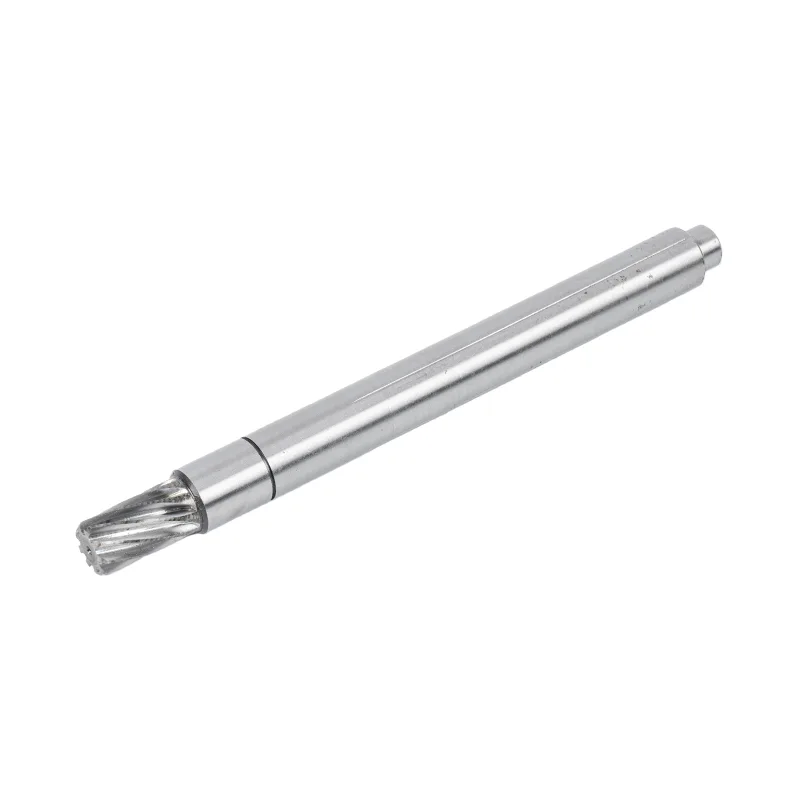
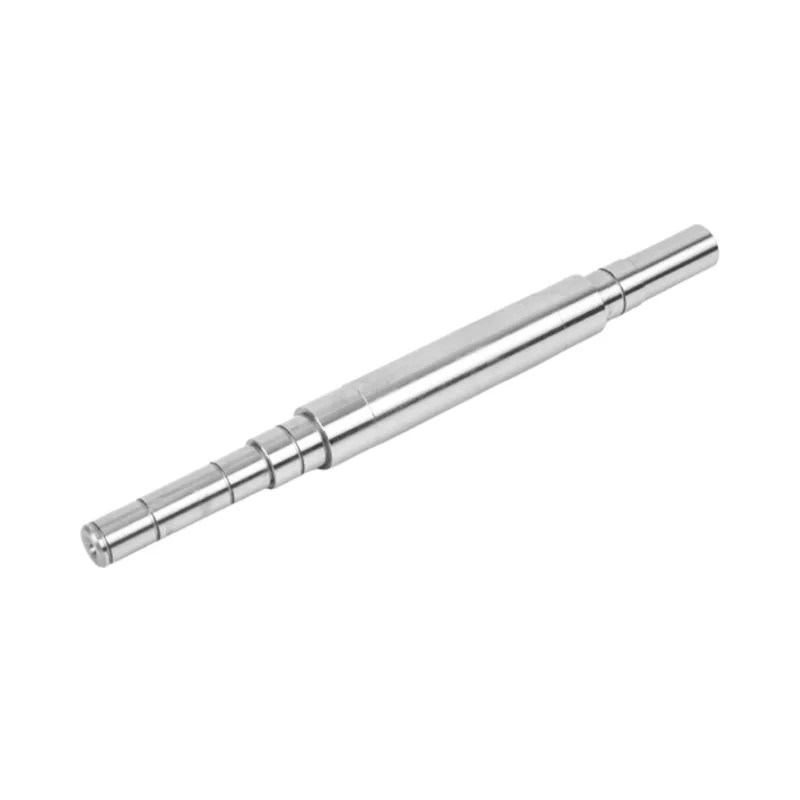
Some automation runs in atmospheres where a spark is the hazard. Explosion-proof motor shafts hold runout to ≤0.01 mm and can be made from non-sparking alloy. The tight runout is not only about accuracy here. It keeps the rotor centred so that nothing rubs, because rubbing is what generates heat and sparks in the first place.
Most automation shafts are stepped shafts. Each step locates a bearing, a seal, a gear, or the rotor stack at a set position along the length. Two specs govern whether those parts sit square.
The perpendicularity number is the one that bites. A bearing pressed against a step that is not square gets loaded unevenly from the moment it is fitted. It will run hot and fail early, and the fault will look like a bearing problem rather than a shaft problem. Guanshuo builds these as single step and double step shafts.
The output feature is a positioning decision as much as a torque one. Each option trades stiffness against cost.
| Feature | Behaviour | Best fit |
|---|---|---|
| D-flat | Simple, low cost, some clearance | Small steppers, light duty |
| Keyway | High torque, but clearance allows backlash | Gearmotors, one-direction drives |
| Spline | Load shared across many teeth, low backlash | Robot joints, reversing servo drives |
| Taper and drawbolt | Stiffest, effectively zero backlash | Servo output ends |
Keyways are cut to GB/T 1095. For a reversing servo axis, backlash in a keyed joint shows up directly as positioning error, which is why the taper interface dominates at the servo end. Guanshuo holds multi-keyway symmetry to ≤0.02 mm where a key is the right answer.
Automation shafts often need a hard surface without a hard core. Four treatments are available, and they solve different problems.
| Treatment | What it gives |
|---|---|
| Induction hardening | Hard journal, tough core, no dimensional change to speak of |
| Nitriding | Very hard, low-distortion surface. Good for high-speed shafts |
| Hard chrome plating | Wear and corrosion resistance, and a route to reclaim worn journals |
| Ceramic coating | Extreme wear resistance and electrical isolation where needed |
Ask any supplier whether the shaft is ground after the surface treatment. Nitriding and plating both change the finished size. If the treatment is the last operation, the tolerance on the drawing is not the tolerance you receive.
Robot joint shafts face a duty no pump shaft ever sees. They start, stop, and reverse constantly, and every cycle is a fatigue cycle. Guanshuo's industrial robot shafts are built to pass over 1,000,000 fatigue wear cycles without failure, which is the qualifying number for this class of work.
Reaching it is a combination of the whole process, not one trick. Alloy steel, a heat-treat route matched to the grade, generous root radii wherever the diameter changes, and grinding after hardening so the finished geometry is true. The material choices behind this are covered in the shaft material guide, and the process order in the machining walkthrough.
What tolerance does a servo motor shaft need?
Coaxiality of ≤0.005 mm on the finished shaft, with h5 or h6 diameter tolerance and a ground finish of Ra 0.2 to 0.4 μm. Dynamic balance should be G1 or better. Guanshuo reaches these through CNC turning followed by ultra-fine grinding and balance correction.
What is the difference between a servo and a stepper motor shaft?
A servo shaft is tighter in every respect. Coaxiality ≤0.005 mm against stepper runout of ≤0.01 to 0.02 mm, h5 or h6 against h7, Ra 0.2 to 0.4 μm against Ra 0.8 to 1.6 μm, and a specified balance grade the stepper usually does not need. The servo also ends in a 1:10 taper rather than a plain end or D-flat.
Why does dynamic balance matter on an automation shaft?
Imbalance force rises with the square of speed, so a small residual becomes a large vibration at high rpm. That vibration shortens bearing life, adds audible whine in the cell, and degrades positioning accuracy. High-speed shafts are balanced to G1 or better, and spindle shafts to G0.1 to G0.4.
Should a robot joint shaft use a keyway or a spline?
A spline, in most cases. A keyway needs clearance to assemble, and that clearance becomes backlash when the joint reverses. A spline shares load across many teeth with much less lost motion. For servo output ends, a taper with a drawbolt is stiffer still.
Can Guanshuo make shafts for explosion-proof motors?
Yes. Explosion-proof shafts are held to ≤0.01 mm runout and can be supplied in non-sparking alloy. Tight runout keeps the rotor centred so nothing rubs, which is what prevents the heat and sparking the rating exists to avoid.
Send the coaxiality, balance grade, and interface you need. Guanshuo grinds and balances in-house, so the numbers on your drawing are the numbers that get measured. Or reach the team on the contact page.