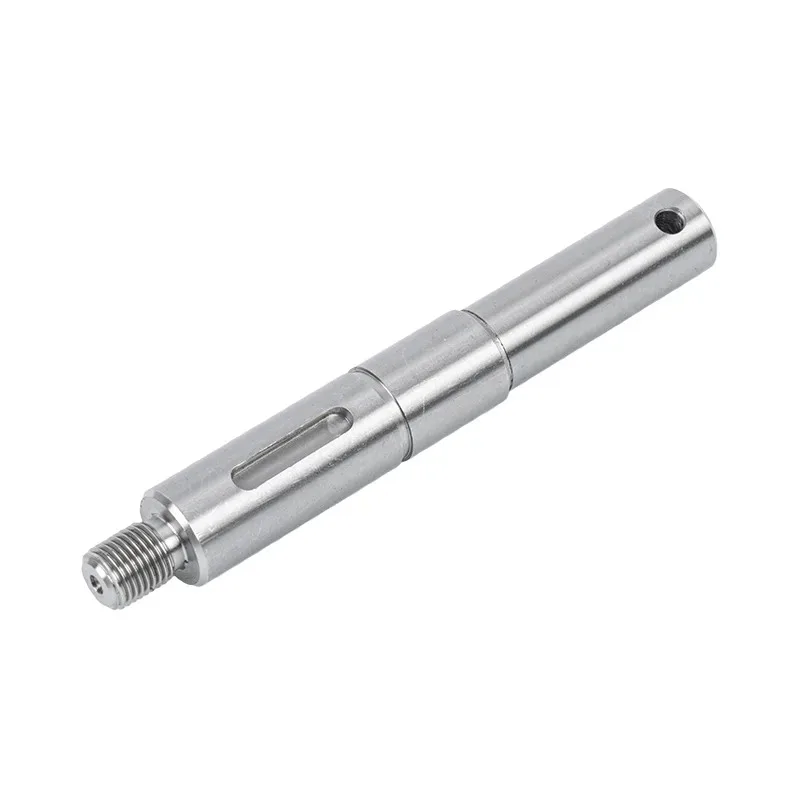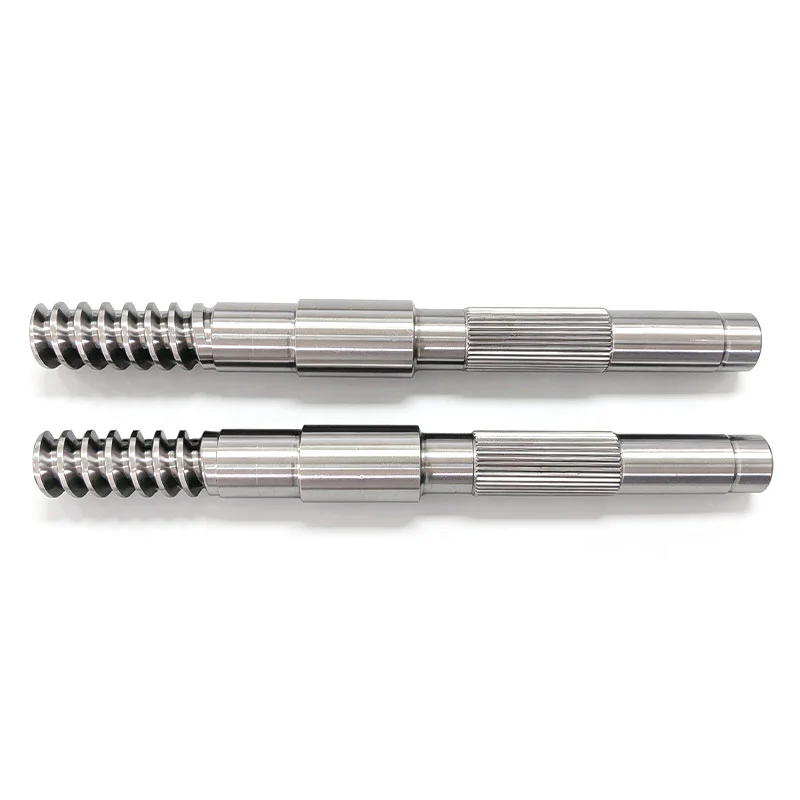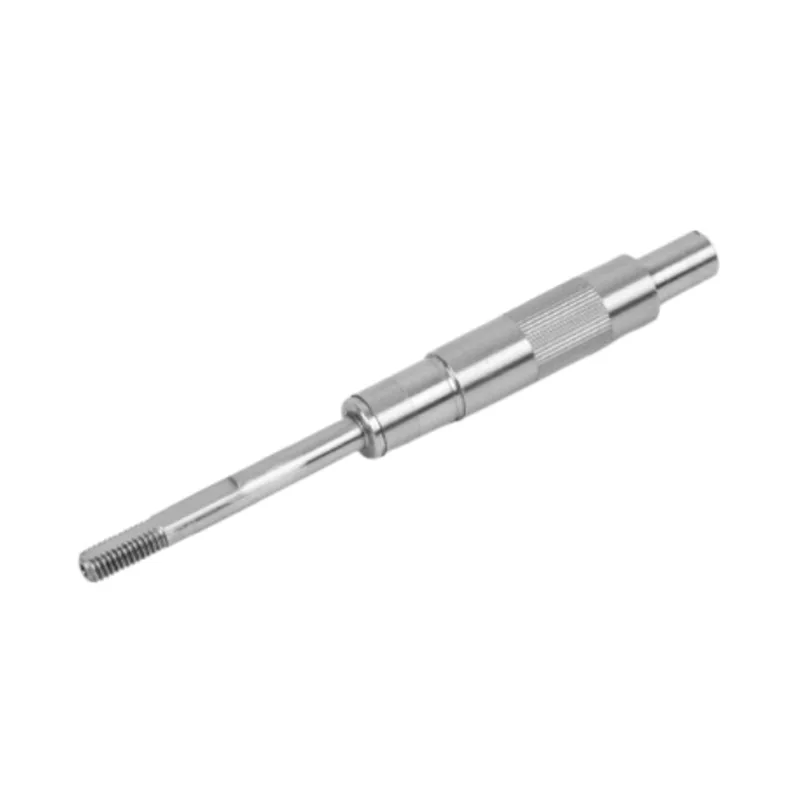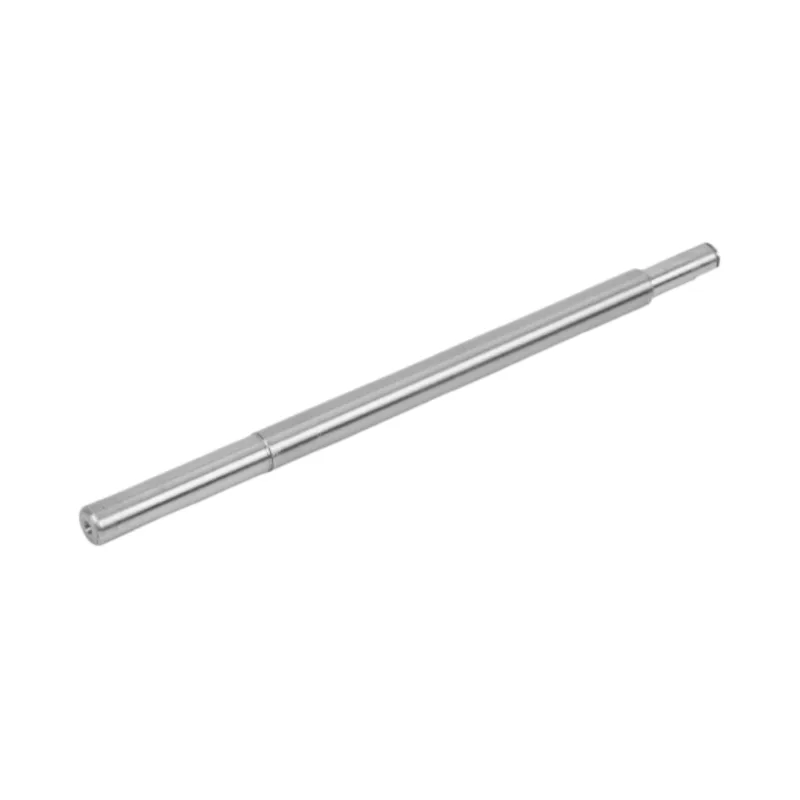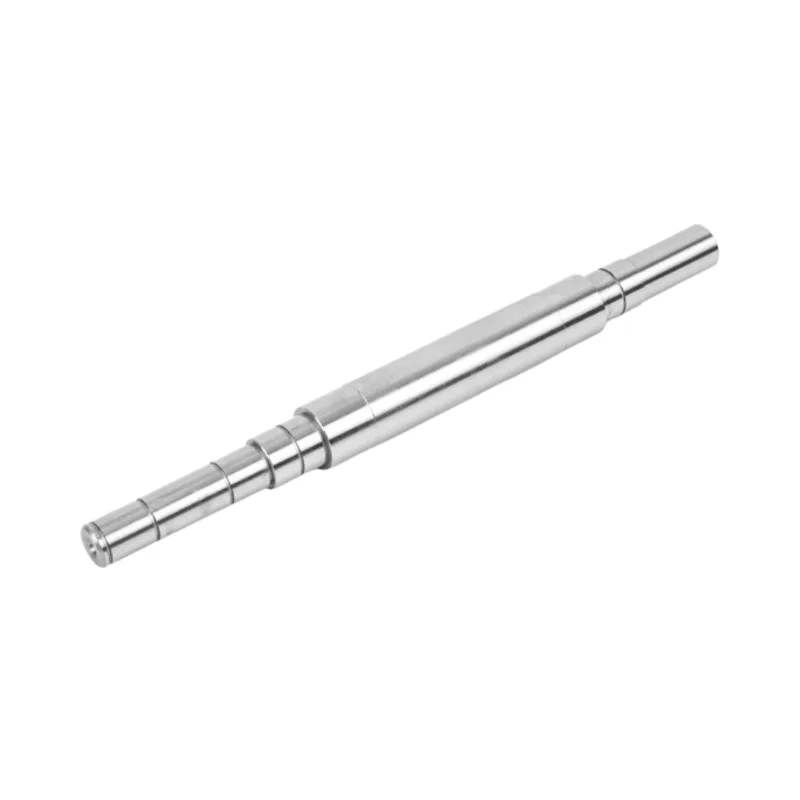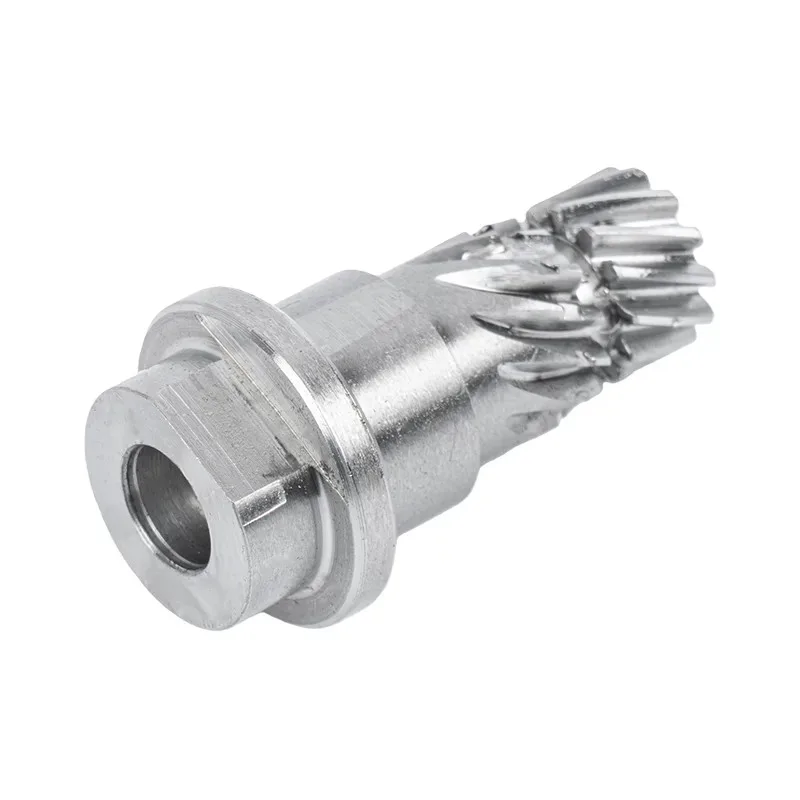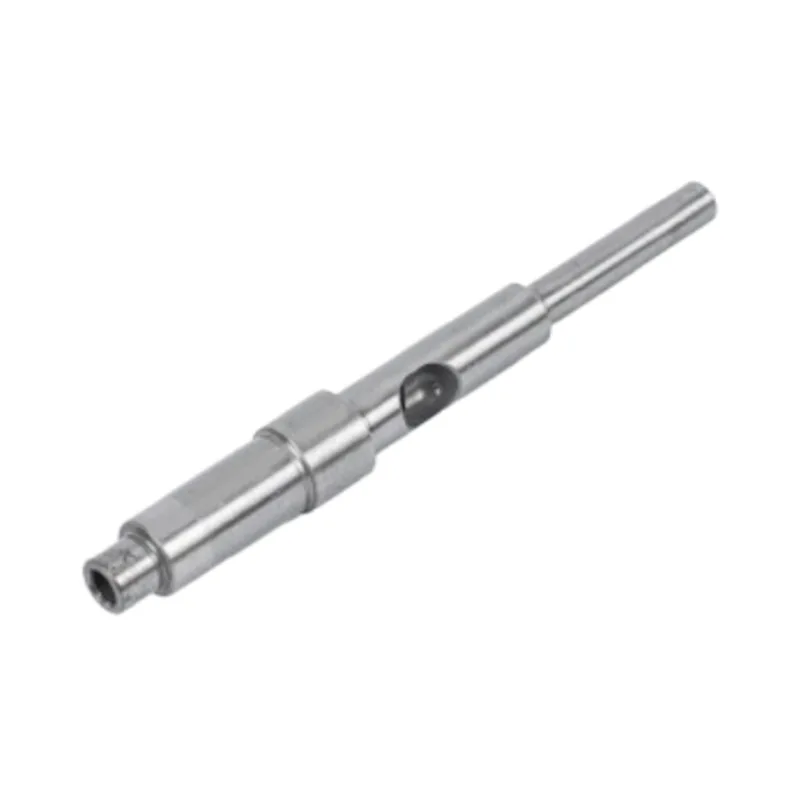

Almost every motor shaft question ends up here: which steel? The honest answer is that there is no best grade, only a best match. A pump shaft that lives in wet air and a traction shaft that reverses torque a thousand times an hour fail in completely different ways. This guide compares the grades Guanshuo actually runs, and gives you a path to pick one.
Buyers often open with a grade name. A better opening is the failure you are trying to prevent. Shafts fail in four ways, and each points at a different family of steel.
That last point is worth holding onto. Upgrading the steel does not stop a shaft bending. All steels have practically the same stiffness. If deflection is your problem, change the diameter, not the alloy.
1045 is where most shafts start, and where most of them should stay. It has enough strength for general duty, it machines predictably, and it takes induction hardening on the journals when a bit of wear resistance is needed. It is also the cheapest option on this page by a clear margin.
4140 is the grade to reach for when 1045 is not enough. The chromium and molybdenum let it through-harden to a high strength while keeping toughness in the core. That combination is what resists fatigue cracking under repeated load reversals, which is exactly the duty an EV or servo shaft sees.
4340 adds nickel and goes further again. It is stronger and hardens deeper, which matters on large-diameter shafts where 4140 would stay soft in the middle. It costs more, so it is reserved for the heaviest duty.
For the full picture of how these grades behave in a traction motor, see the EV rotor shaft guide.
This grade solves a specific conflict. A spline needs a hard surface so the teeth do not wear, but a hard core would be brittle and snap under shock. Carburising 20CrMnTi builds a hard carbon-rich case over a soft, tough core. You get wear resistance on the outside and shock absorption underneath.
It is the standard choice for gear teeth and heavily loaded splines. The trade-off is process time, since carburising is slower and more involved than a straight quench and temper.
Stainless is not a strength upgrade. It is a corrosion answer, and it usually costs strength to get there. Pick a stainless grade only when the shaft will meet water, steam, chemicals, or a washdown cycle. Guanshuo's stainless steel smooth shafts run in three grades.
Good corrosion resistance, clean, and easy to keep hygienic. It cannot be hardened by heat treatment, so it stays relatively soft. Fine where loads are modest and cleanliness matters.
The molybdenum addition sharply improves resistance to chlorides and pitting. This is the grade for salt, seawater, harsher chemicals, and medical equipment where sterilisation cycles are routine.
420 is the compromise grade. Being martensitic, it responds to heat treatment and reaches HRC 48 to 55, so it gives a genuinely hard journal while still resisting corrosion. Its corrosion resistance sits below 304 and well below 316L, but for a wet application that also needs a hard, wear-resistant surface, it is often the only sensible answer.
Run these five questions from the top. The first one that returns a yes usually decides the grade.
Shaft drawings quote hardness in two scales, and mixing them up causes real confusion in quoting. Brinell, written HB, is used for softer, through-tempered conditions. Rockwell C, written HRC, is used for hardened surfaces. Roughly, the HB scale runs out where the HRC scale becomes useful.
| Condition | Typical hardness | What it delivers |
|---|---|---|
| Tempered 1045 or 4140 | HB 220 to 260 | Balanced strength, still machinable |
| Induction hardened journal | HRC 40 to 50 | Wear resistance on the surface only |
| Quenched and tempered alloy | HRC 42 to 48 | Strength and fatigue life through the section |
| Hardened 420 stainless | HRC 48 to 55 | Hard journal plus corrosion resistance |
| Spindle-grade surface | HRC 60 to 65 | Maximum wear resistance for high-speed spindles |
One rule saves a lot of scrap. Specify hardness on the feature, not on the part. A drawing that says "harden to HRC 55" without saying where invites a shop to through-harden a shaft that only needed a hard journal. Details of how hardening and grinding interact are covered in the precision shaft machining walkthrough.
The same steel carries different names depending on where the drawing was written. These are the pairs that come up most in export work.
| China GB | US AISI/SAE | EN / DIN | Japan JIS |
|---|---|---|---|
| 45# | 1045 | C45 / 1.0503 | S45C |
| 40Cr | 5140 | 41Cr4 / 1.7035 | SCr440 |
| 42CrMo | 4140 | 42CrMo4 / 1.7225 | SCM440 |
| 40CrNiMoA | 4340 | 34CrNiMo6 / 1.6582 | SNCM439 |
| 20CrMnTi | 8620 (near) | 20MnCr5 / 1.7147 | SCM420 (near) |
| 0Cr18Ni9 | 304 | 1.4301 | SUS304 |
| 00Cr17Ni14Mo2 | 316L | 1.4404 | SUS316L |
| 4Cr13 | 420 | 1.4034 | SUS420J2 |
Guanshuo runs 45# carbon steel, 40Cr and 4140 alloy, 20CrMnTi case-hardening steel, and 304, 316L, 316 and 420 stainless as standard stock grades. Every bar is checked against its mill certificate on arrival, before a single cut, because a grade mix-up is only discovered at the hardening stage when the machining hours are already spent.
Heat treatment runs in-house, so the route can be matched to the grade rather than to whatever a subcontractor offers. Finished shafts are balanced to ISO G2.5 or better where the application calls for it, and to G0.1 to G0.4 on high-speed work.
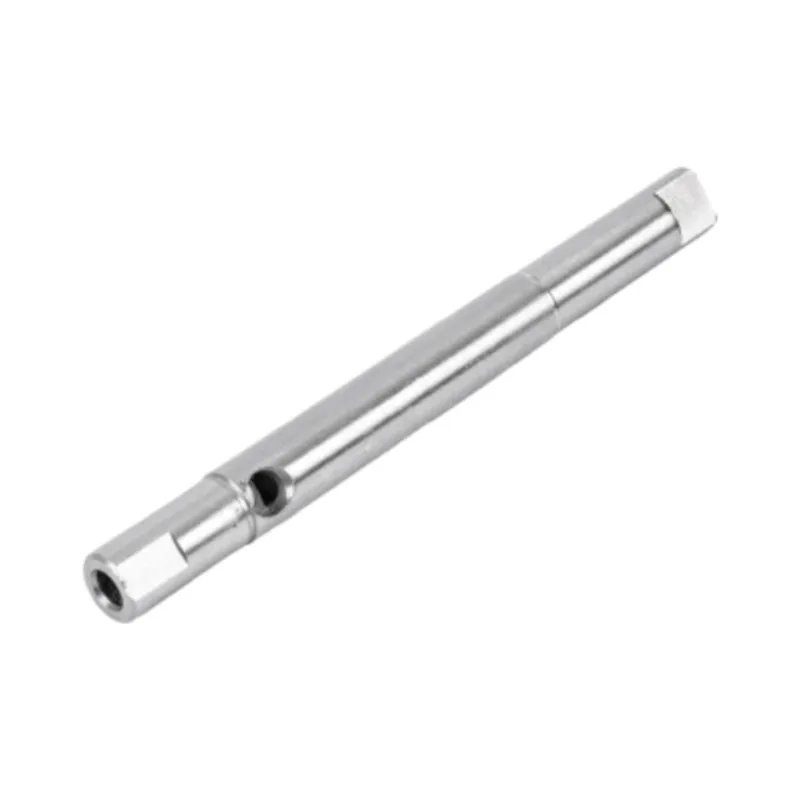 Stainless Smooth Shaft
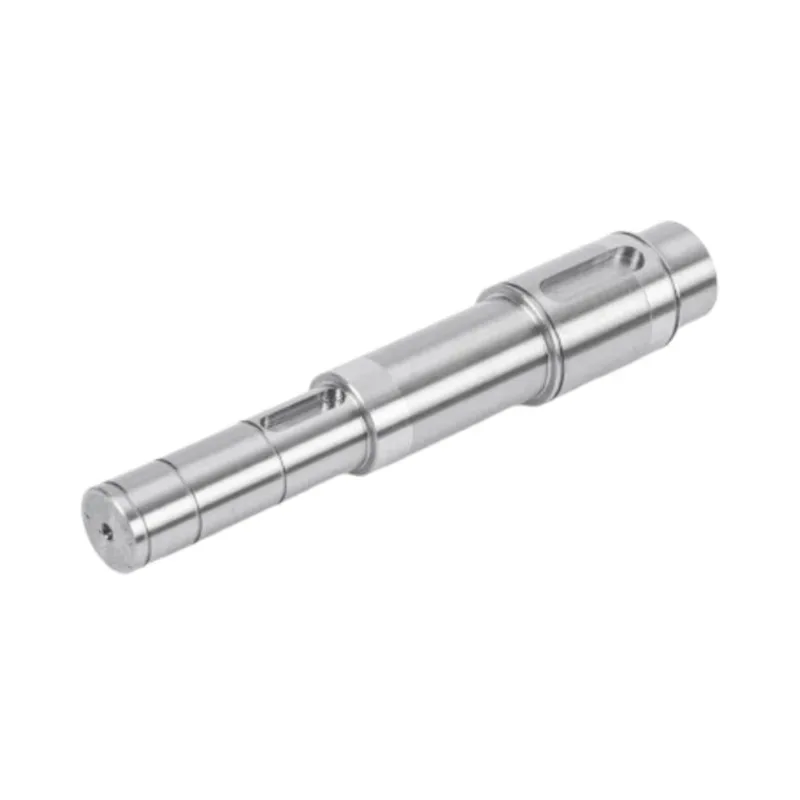
 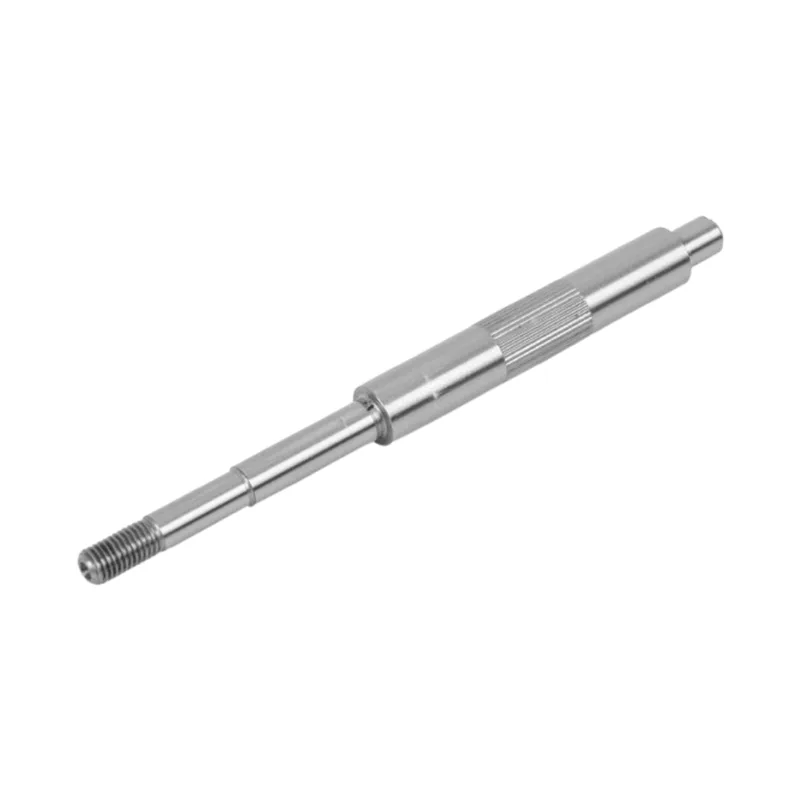 Standard Motor Shaft
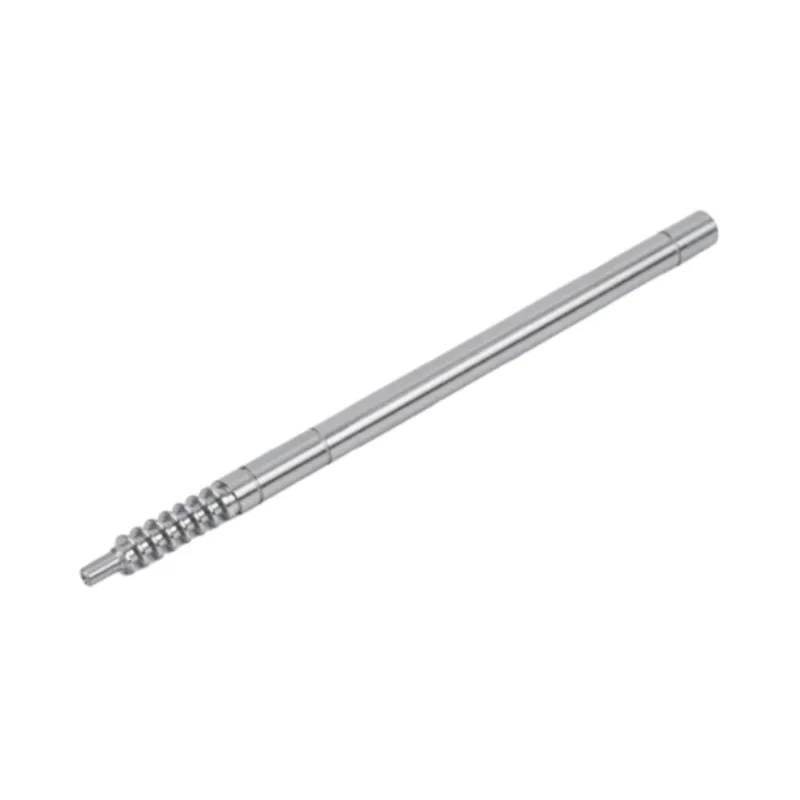
 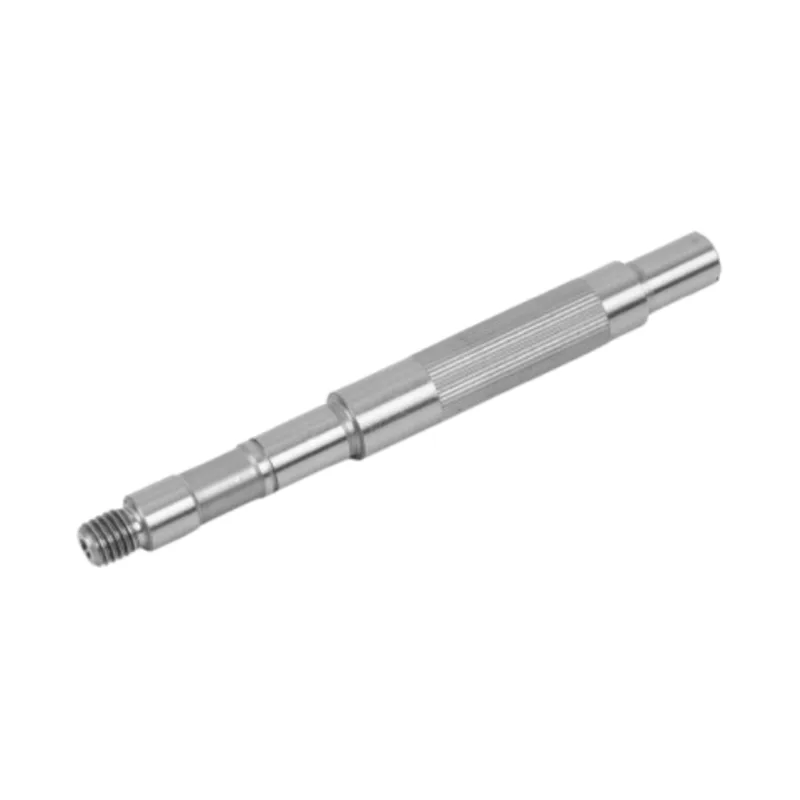 Reducer Motor Shaft
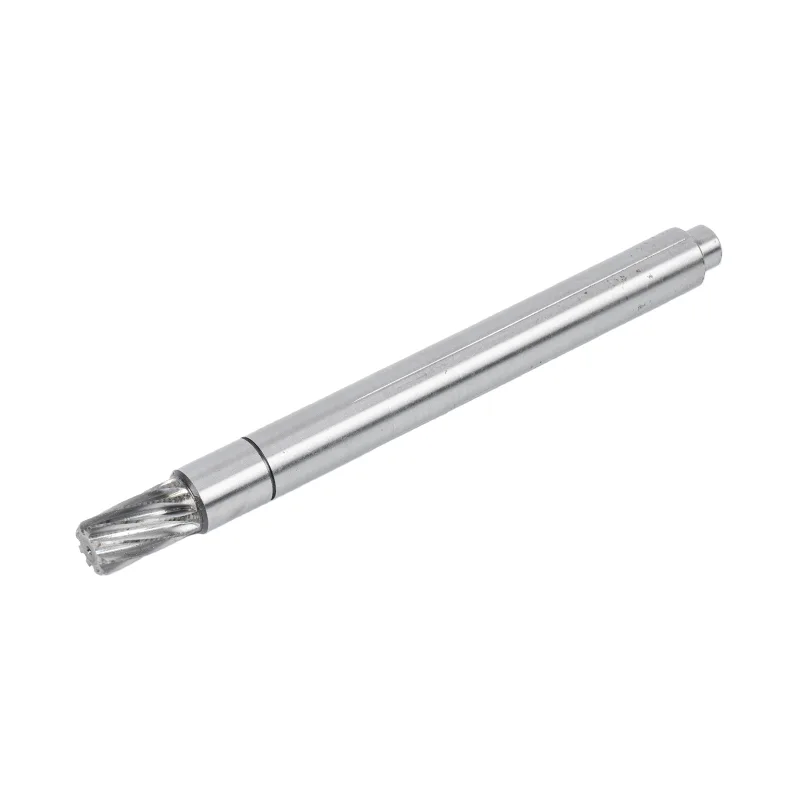
 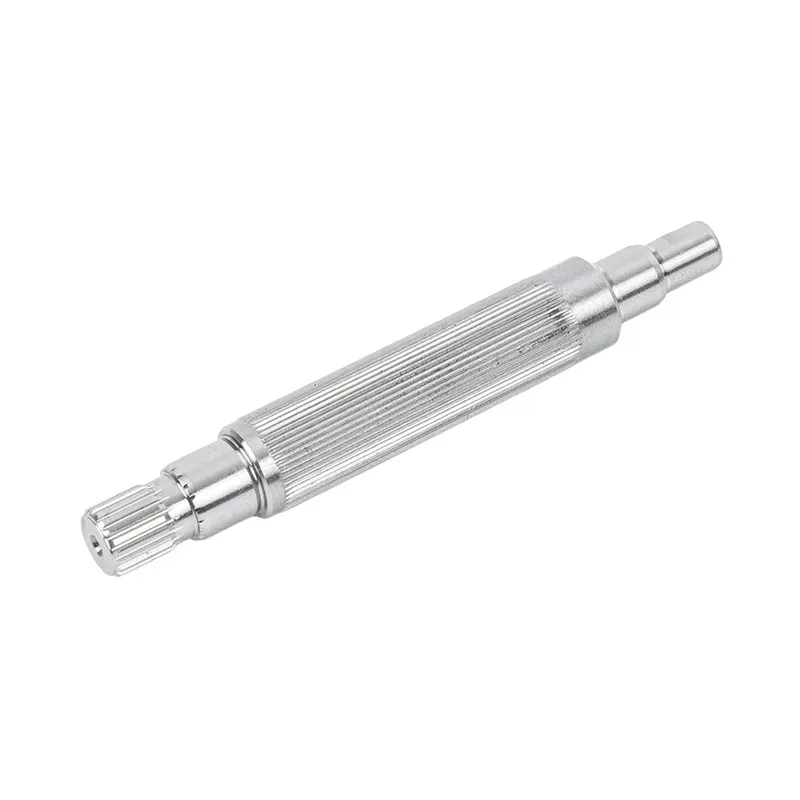 Involute Spline Shaft
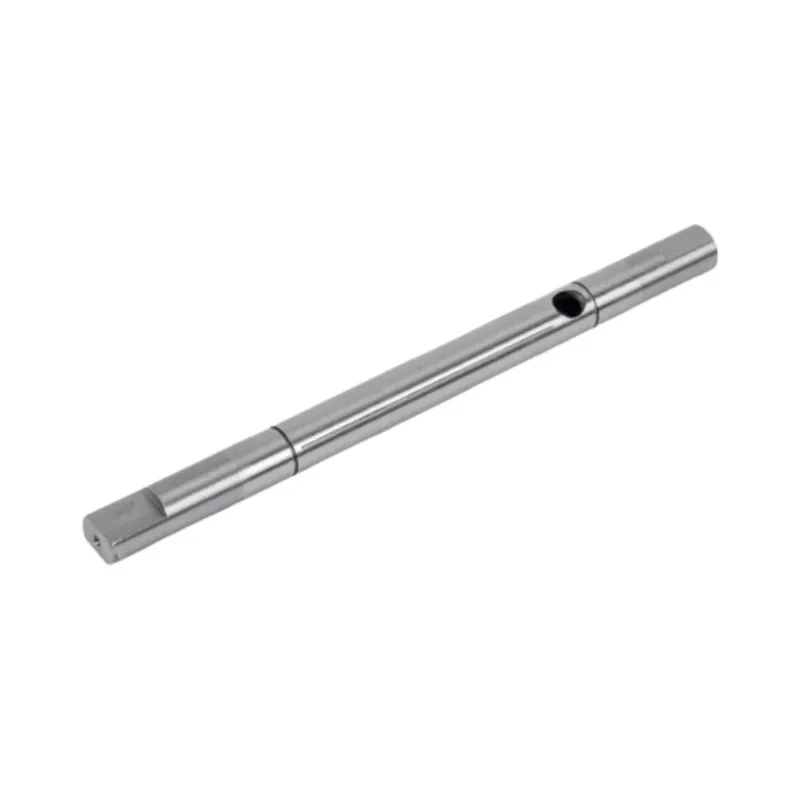
 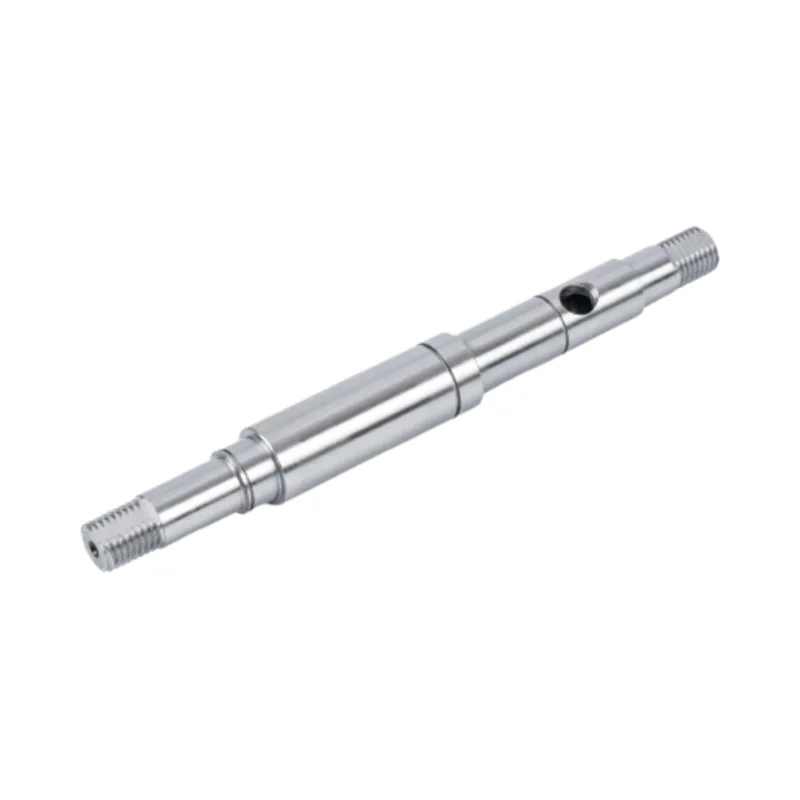 Hollow Motor Shaft
  Ground Smooth Shaft
Is 4140 always better than 1045 for a motor shaft?
No. 4140 is stronger and has better fatigue life, but it costs more and is harder to machine. If the shaft runs at a steady load in a dry place, 1045 does the job for less. 4140 earns its price when torque reverses often, speed is high, or fatigue life is specified. Match the grade to the duty rather than defaulting to the stronger steel.
Which stainless steel is best for a motor shaft?
It depends on what you need alongside corrosion resistance. 304 suits clean, wet, light-duty use. 316L is the choice where chlorides, salt, or medical sterilisation are involved. 420 is martensitic, so it hardens to HRC 48 to 55 and gives a hard journal, at the cost of lower corrosion resistance than 304 or 316L.
Will a stronger steel stop my shaft bending?
No. All steels have almost the same stiffness, so changing grade barely changes deflection. Bending is controlled by geometry. Increase the shaft diameter, shorten the unsupported span, or move the bearing positions. Save the alloy upgrade for fatigue and wear problems.
What is 20CrMnTi used for on a shaft?
It is a case-hardening steel used where gear teeth or heavily loaded splines are cut into the shaft. Carburising builds a hard, wear-resistant case over a tough core, so the teeth resist wear while the body still absorbs shock. For a plain journal, induction-hardened 1045 or 4140 is usually a better value.
Can Guanshuo advise a grade if I only know the application?
Yes. Send the torque, speed, environment, and any wear or corrosion concerns. The engineering team will propose a grade and heat-treat route, then confirm it on the drawing before production. Guanshuo stocks 45#, 40Cr, 4140, 20CrMnTi, and 304, 316L and 420 stainless as standard.
Send the duty, not just the drawing. Torque, speed, environment, and expected life are enough for the Guanshuo engineering team to propose a grade, a heat-treat route, and a price.
Ask an engineer Or reach the team on the contact page.