Shaft runout controls geometric motion relative to a datum axis. Dynamic balancing controls how mass is distributed around the rotation axis. A balance quality grade such as G1 is expressed in mm/s and must be paired with service speed and rotor mass to calculate permissible residual unbalance. The specification should also state whether the test covers a bare shaft or the final rotor assembly, the balancing standard and edition, one or two correction planes, the key convention, allowed correction methods and the required report. Low runout supports repeatable balancing, but it does not prove balance.
Straightness controls the form of a surface line or derived median line without referencing another feature. Circular runout measures variation at one cross-section while the shaft rotates about a stated datum axis. Total runout sweeps the full controlled surface during rotation. Concentricity or coaxiality concerns the relationship between derived centers or axes and is not the same as a dial-indicator TIR reading. State the drawing standard, functional datum, controlled surface, axial span, final manufacturing condition and inspection method before assigning a tolerance.
Calculate fits from the maximum and minimum hole and shaft sizes, not from nominal diameters. Calculate axial stacks by adding the contributing limits in the same measurement path. Keep size tolerance separate from roundness, straightness, runout, perpendicularity and surface texture. Use functional journals and shoulders as datums, and state the inspection temperature when micrometre-level limits make thermal expansion relevant.
Mark every hardened zone on the shaft drawing. For each zone, state the heat-treatment process, final surface-hardness range, effective case-depth definition and limits, hardness test location, and whether the requirement applies after final grinding. Identify any areas that must remain soft and allow a transition zone where the process needs one. Surface hardness alone does not prove case depth, and case depth measured before grinding does not automatically describe the finished shaft.
Specify bore diameter and fit, full-diameter depth, permitted bottom profile, minimum remaining end wall, and the bore's relationship to the working shaft journals. Keep usable installation length separate from drill-point depth. Guanshuo's blind-hole range lists a 2-30 mm bore, 5-150 mm depth and a maximum depth-to-diameter ratio of 10:1; those limits must be considered together, not mixed freely.
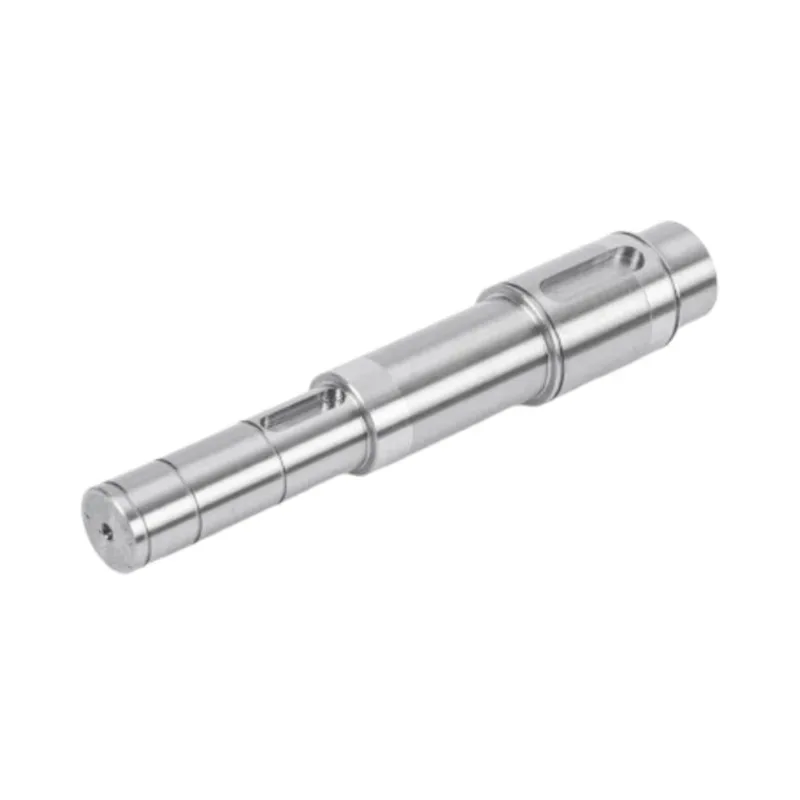
Keep a single keyway when the complete shaft, key and hub connection meets the load and assembly requirements. Consider opposed double keyways when one hub needs two torque-transfer paths and the mating geometry can be manufactured and verified together. Two keys do not automatically double the connection's rating: dimensional differences can make one key engage first, and the shaft and hub still need their own strength checks.
We use cookies to offer you a better browsing experience, analyze site traffic and personalize content. By using this site, you agree to our use of cookies. Privacy Policy


 17 2026-09
  17 2026-09
  17 2026-09
  17 2026-09
  10 2026-09