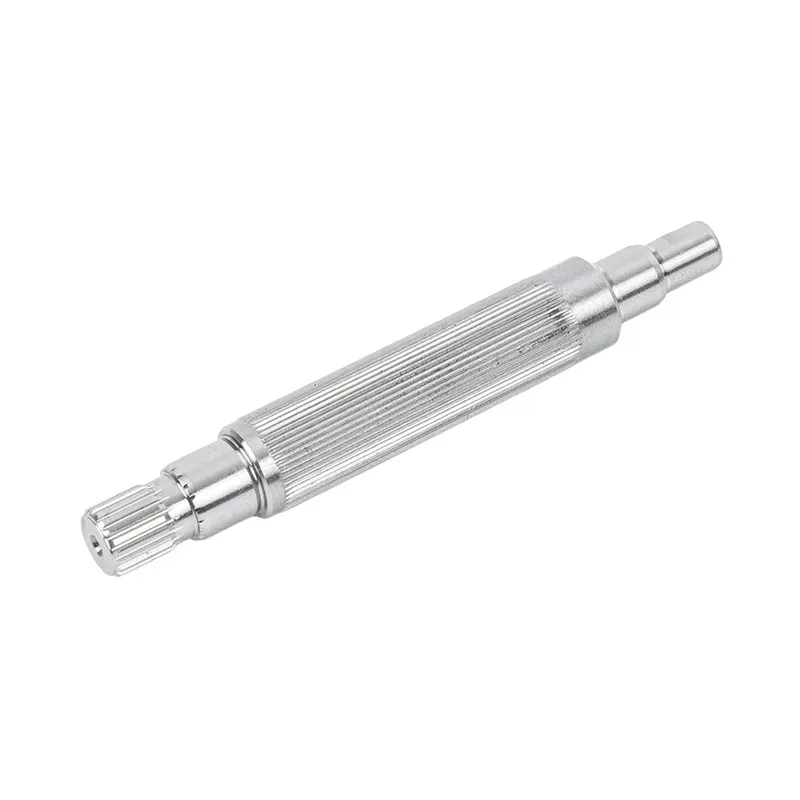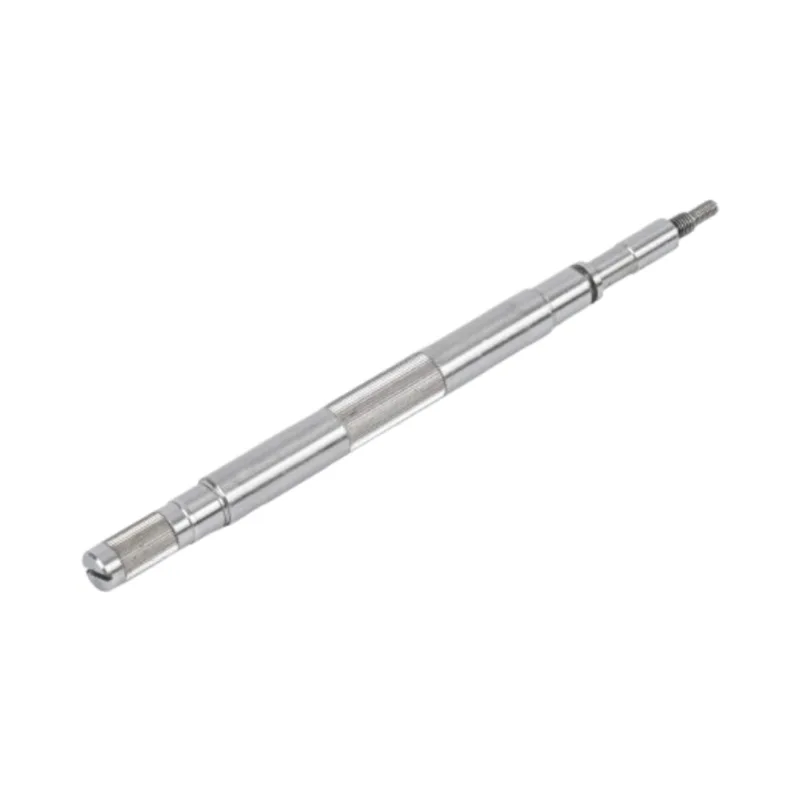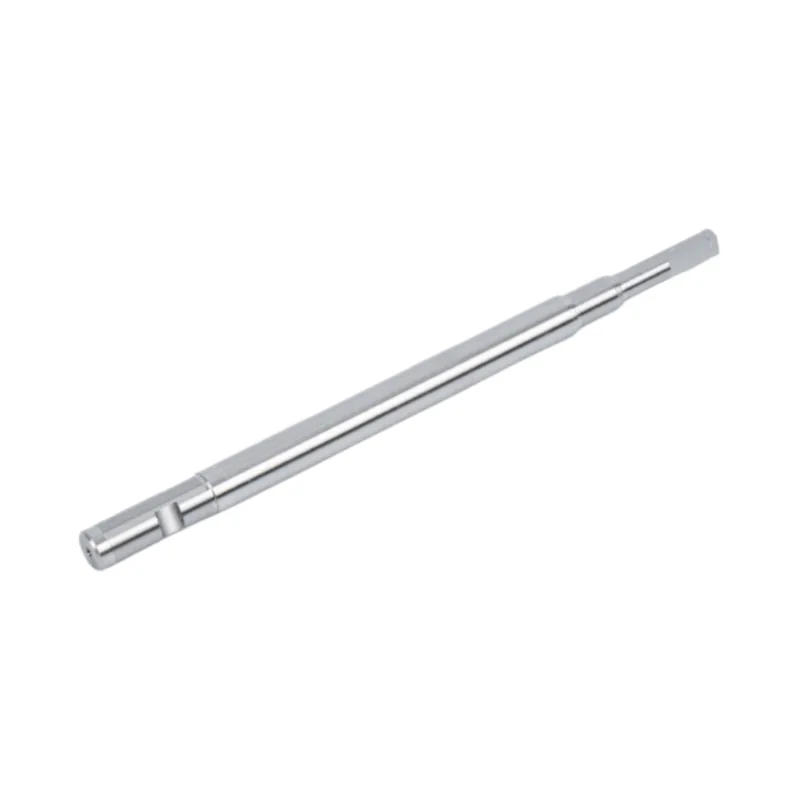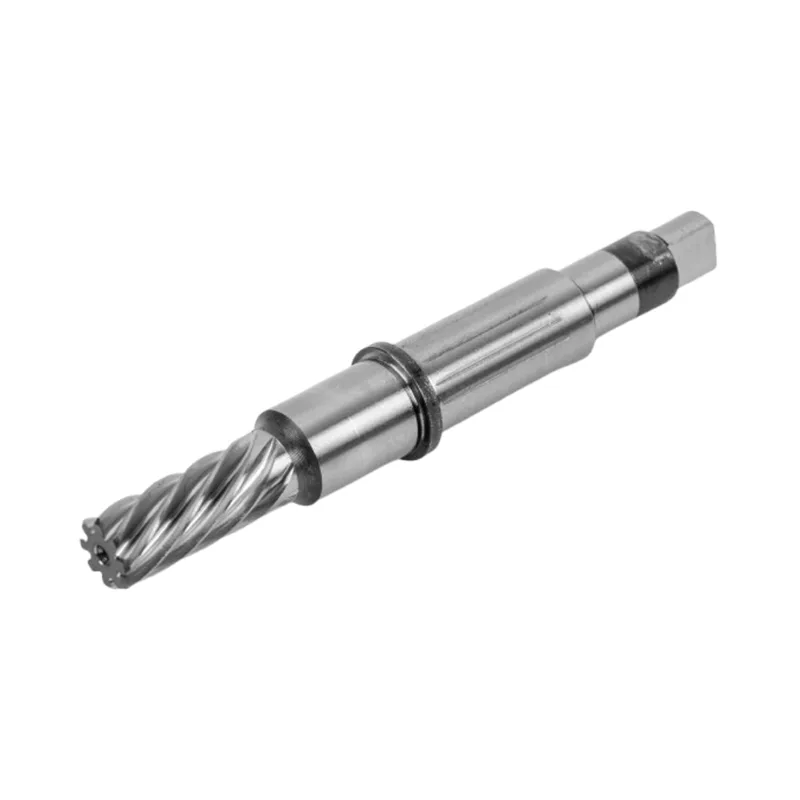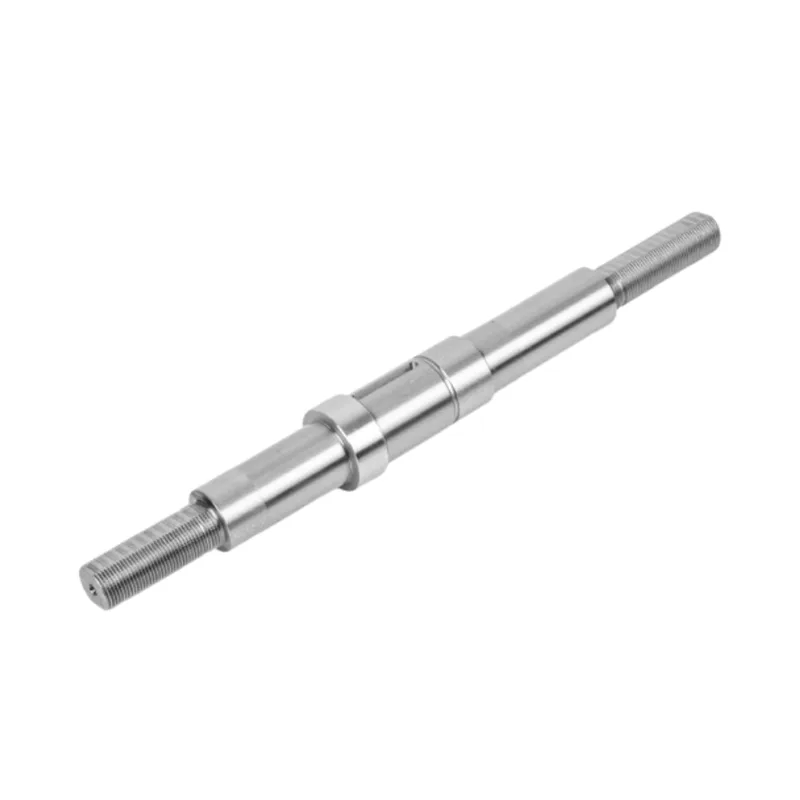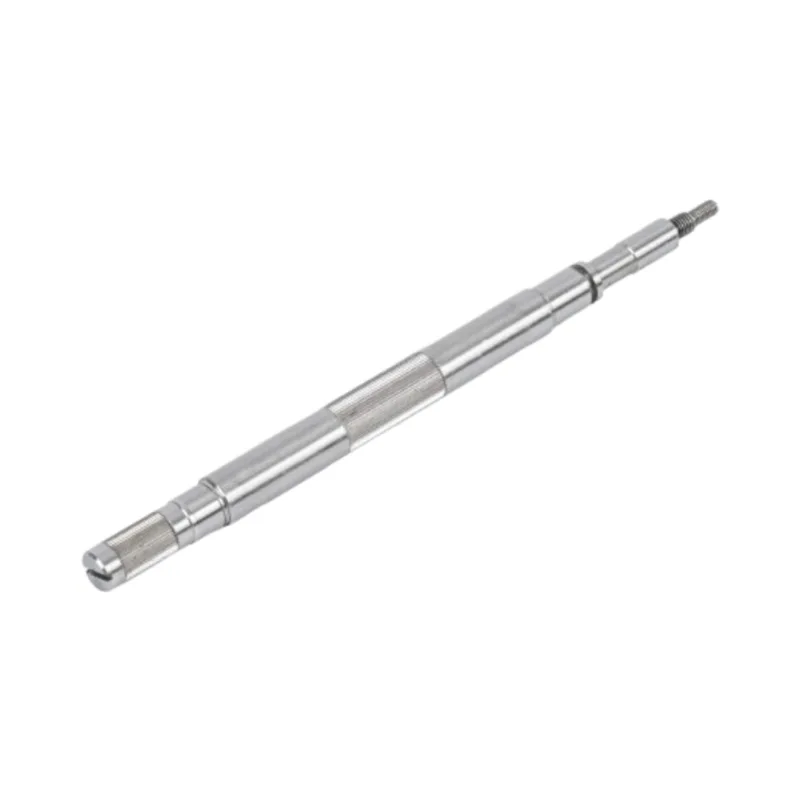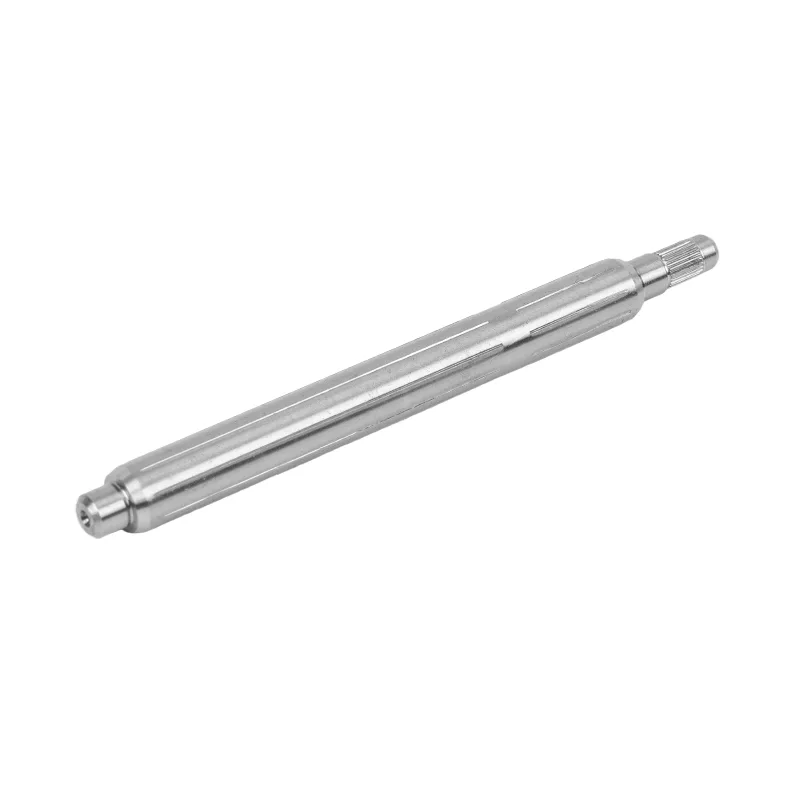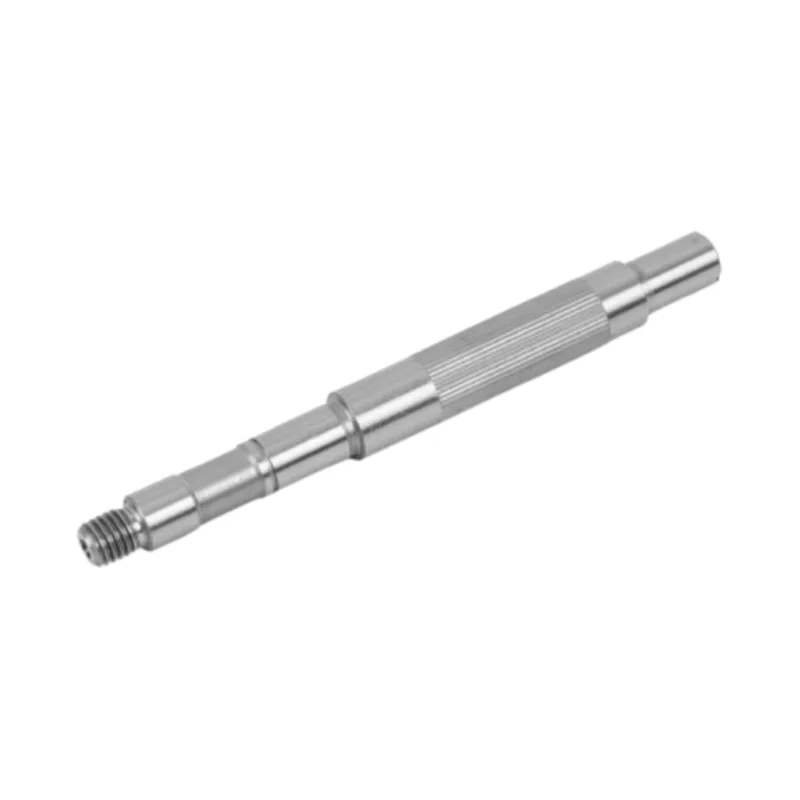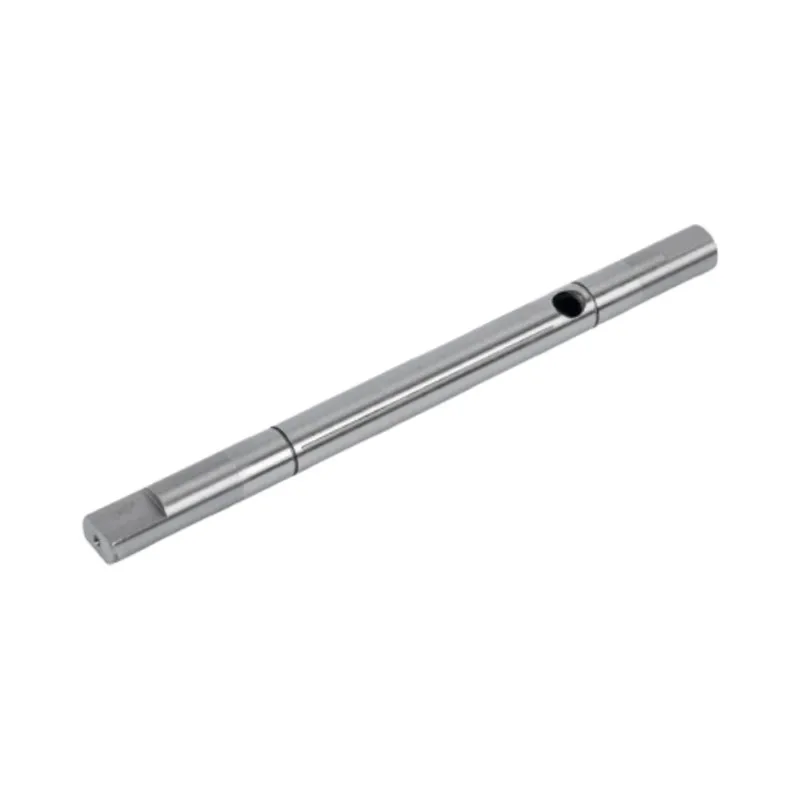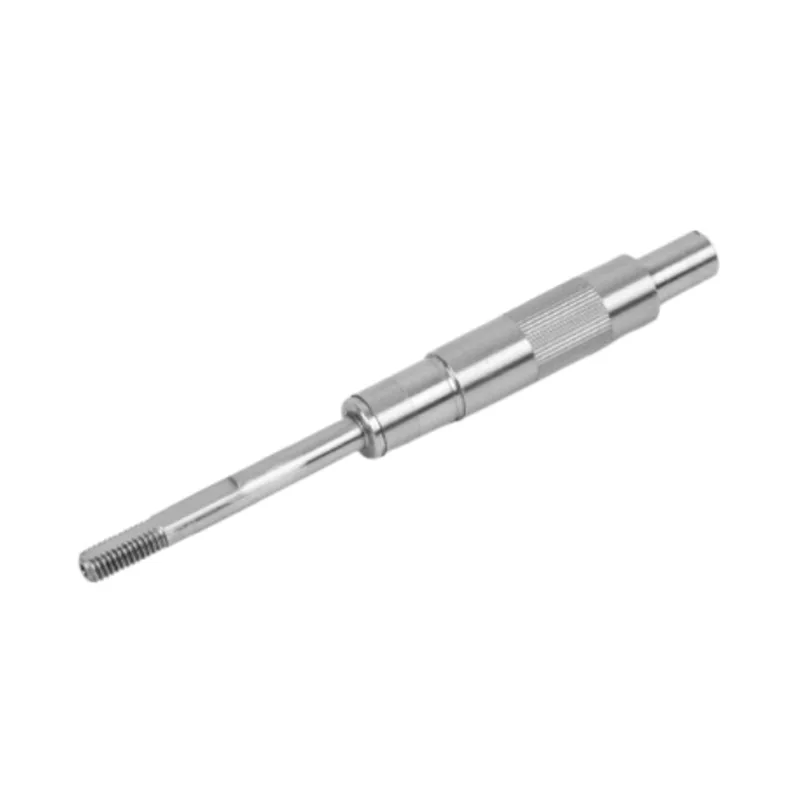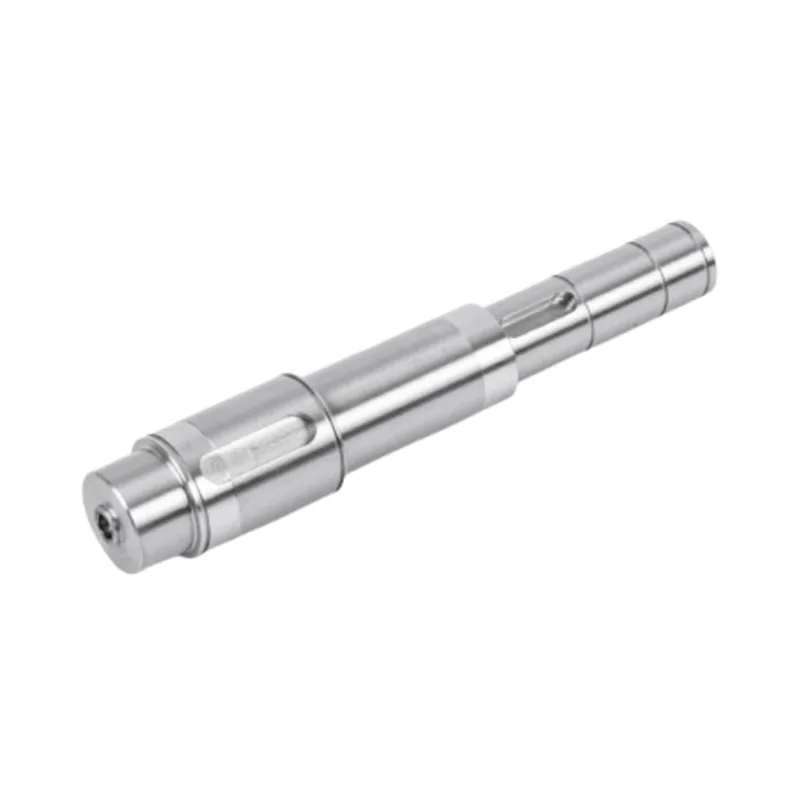

Shaft machining is the process of turning raw bar stock into a finished shaft through cutting, milling, grinding and heat treatment. On a precision part — a motor or pump shaft, say — the diameter is usually held to the IT5–IT6 band with a ground finish down to Ra 0.4 μm. Which processes you use, and in what order, depends on the material, the geometry, and how tight the runout has to be.
A motor is only as good as the shaft running through the middle of it. Let that shaft run out by a few microns and you feel it everywhere downstream — as vibration, as noise, as bearings that wear out months early. That is why shaft machining sits at the center of what we do. For more than a decade we have turned bar stock into shafts that hold their tolerances under load, for EV drive motors, automation lines and home appliances shipped to more than forty countries.
This guide walks through how a precision shaft is really made: the machining steps in order, the tolerances worth arguing over, the materials, and how to tell a capable machining partner from one that is merely cheap.
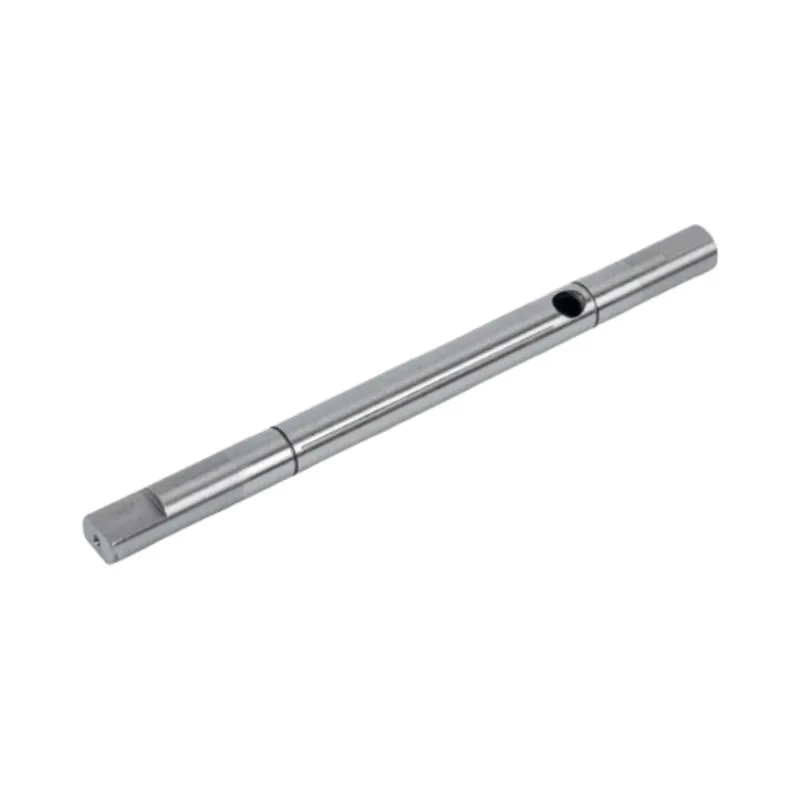
What is shaft machining?
Shaft machining is a subtractive process. You start with a round bar and remove metal until what is left meets the drawing — the right diameters, the right lengths, a keyway here, a thread there, all within tolerance. Nothing is added; the accuracy comes entirely from taking material away in the right places.
The reason it gets its own name, rather than being lumped in with general "machining," is that a shaft rotates. A bracket can be a tenth of a millimetre off and no one notices. A shaft spinning at several thousand RPM cannot. Concentricity, straightness and surface finish all feed directly into how quietly and how long the finished assembly runs. Precision shaft machining is really about controlling those three things across the whole length of the part.
The shaft machining process, step by step
No two jobs are identical, but a precision shaft usually moves through the shop in roughly this order. The sequence matters as much as the individual operations — grind before you harden and the heat will pull the part back out of tolerance.
Material selection and cut-offBar stock is chosen for the load and environment, then cut to length with a little extra for facing and grinding stock.Rough turningOn a CNC lathe the bar is brought close to its finished shape, leaving a few tenths of a millimetre on critical diameters for the grinder to clean up later.
Drilling or boringOnly for hollow shafts — the bore is drilled or gun-drilled through the center before the outside is finished.
MillingKeyways, flats, splines and cross-holes are cut on a mill or a turn-mill machine while the part is still soft and easy to work.
Heat treatmentThe shaft is hardened — commonly quench and temper, sometimes induction hardening on the bearing journals — to build strength and wear resistance.
Finish grindingCylindrical or centerless grinding brings the running diameters down to final size and surface finish, correcting any distortion left by heat treatment.
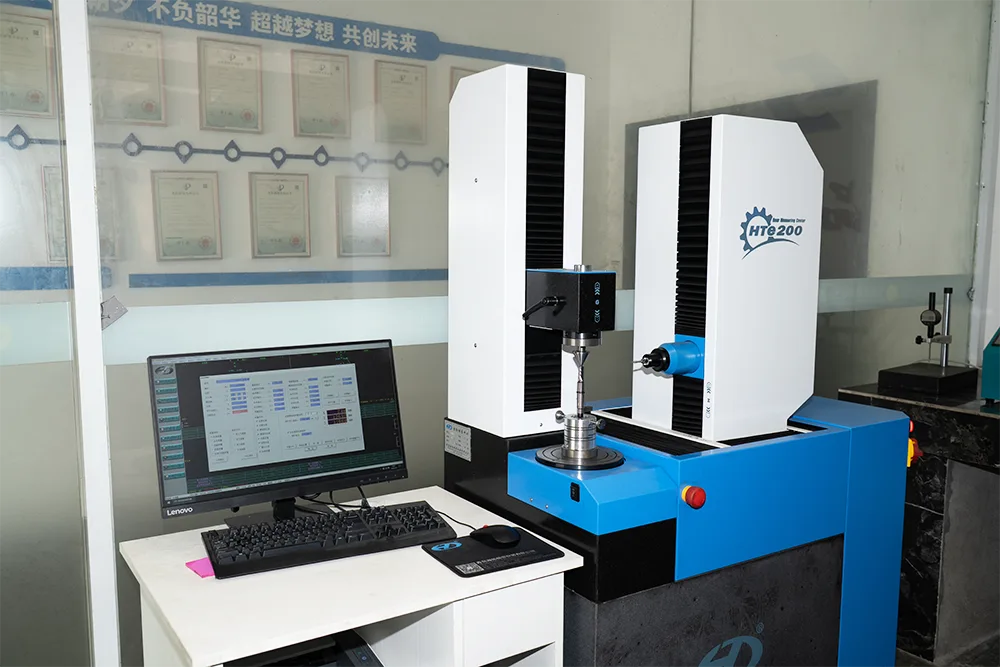
InspectionDiameters, runout, concentricity and surface roughness are checked against the drawing before anything ships.
Marking and packingAnti-rust treatment, laser marking where needed, then packing that protects the ground surfaces in transit.
- Why the order is fixed: hardening warps a shaft slightly — that is physics, not a defect. Leaving the finish grind until after heat treatment is how you end up with a hard, wear-resistant part that is still dead straight. Shops that grind first and harden last ship shafts that measure fine on paper and vibrate in the field.
The core processes: turning, milling and grinding
Three families of operation do most of the work on a shaft. Turning defines the round profile, milling adds the features, and grinding delivers the precision. Here is how they compare on a typical job.
| Process | What it does on a shaft | Best suited to | Typical precision |
|---|---|---|---|
| CNC turning | Cuts the overall round profile, shoulders and diameters from bar stock | Every shaft, as the roughing and semi-finishing stage | ±0.02–0.05 mm |
| Milling / turn-mill | Cuts keyways, flats, splines, cross-holes and threads | Shafts with drive features or non-round detail | Feature-dependent |
| Cylindrical grinding | Finishes journals between centers for tight roundness and concentricity | Stepped and shouldered shafts | IT5–IT6, Ra ≤ 0.4 μm |
| Centerless grinding | Finishes plain diameters on a work rest, no center holes needed | Long, straight shafts in higher volumes | IT5–IT6, Ra ≤ 0.4 μm |
| Friction welding | Joins two materials end to end — e.g. a stainless head on a steel body | Bi-metal shafts that save on expensive alloy | Full-strength joint |
The choice between cylindrical and centerless grinding is the one that trips up buyers most often. Cylindrical grinding is the more precise of the two for a part with steps, because the shaft turns on its own center holes. Centerless grinding gives up a little of that positional control in exchange for speed, which is exactly what you want on a long, plain shaft running in volume. In practice we run both — the part decides, not the machine.

Materials we machine — and how the choice changes the job
Material is the first decision on any shaft, and it quietly sets everything after it: how the part cuts, whether it can be hardened, how it behaves in a corrosive or hygienic setting. We machine across carbon steel, alloy steel and stainless steel, and the right family comes down to load, environment and budget.
| Material family | Common grades | Why you would choose it |
|---|---|---|
| Medium-carbon steel | 1045 / C45 | The workhorse. Good strength, easy to machine, takes induction hardening — covers most general-duty shafts at the lowest cost. |
| Alloy steel | 40Cr / 4140 | Higher strength and fatigue life, responds well to quench and temper. The pick for loaded drive shafts. |
| Stainless steel | 303 / 304 / 316 / 420 | Corrosion and hygiene. Used where the shaft sees moisture, chemicals or wash-down — food, medical, pumps. |
There is more nuance here than one table can hold — grade selection, heat-treat response and how each machines. We covered it in depth in what materials are used for motor shafts, which is worth a read before you finalise a drawing.
Tolerances, finish and runout: the numbers that matter
This is where shaft machining gets interesting, and where price and quality actually diverge. A drawing that simply says "turn to size" is a very different job from one calling out IT6 diameters and 0.01 mm runout. Three specifications carry most of the weight.
| Specification | What it controls | Precision-shaft range | Guanshuo standard |
|---|---|---|---|
| Dimensional tolerance (IT grade) | How closely each diameter matches the target size | IT5–IT7 on running fits | IT5–IT6 |
| Surface roughness (Ra) | How smooth the ground journal is — drives friction and bearing life | Ra 0.4–0.8 μm | Ra ≤ 0.4 μm |
| Runout / concentricity | How true the shaft spins about its own axis | 0.01–0.02 mm on key journals | Held on center-ground journals |
A quick word on reading these. IT grades come from the ISO tolerance system — a lower number means a tighter band, and each drop in grade costs real machining time, so it pays to specify tight only where the part actually needs it. Ra is the average roughness of the finished surface; a ground shaft at Ra 0.4 μm feels glass-smooth and lets a bearing or seal run cool. Runout ties the two together: it is the wobble you would see on a dial indicator as the shaft turns, and on a rotating part it is often the single number that decides whether the assembly is quiet or not.
Heat treatment: where a shaft earns its strength
Machining gives a shaft its shape; heat treatment gives it its backbone. Straight out of turning, most shaft steels are relatively soft — fine for cutting keyways, not fine for years of reversing load. Heat treatment fixes that by changing the steel's structure, not its dimensions.
The most common route for shaft work is quench and temper: heat the part, cool it quickly to harden it right through, then temper it back to trade a little hardness for toughness. Where only the running surface needs to be hard — a bearing journal, for instance — induction hardening heats just that band and leaves the core tough. The trade-off is always the same: harder resists wear, tougher resists cracking, and the tempering step is where you balance the two.
Heat treatment is also the reason the process order is what it is. Because hardening distorts the part slightly, it belongs before the finish grind, never after. Grind the shaft, then harden it, and you have just undone your own precision.
Quality control on the shop floor
Precision that is not measured is just hope. Every critical diameter, the runout on the key journals and the surface finish get checked against the drawing before a shaft leaves the building. That inspection discipline is part of why we hold ISO 9001 certification and why our work has earned 11 granted patents over the years.
Capacity matters here too, because consistent precision comes from having the right machines in quantity rather than one good grinder and a queue. Our grinding line runs 26 CNC cylindrical grinders and 6 high-precision centerless grinders, which is what lets us hold IT5–IT6 across a production run rather than on a single hero part. As a national high-tech enterprise founded in 2016, we have built the shop around one thing: shafts that measure the same on part one and part ten thousand.
The shafts we machine
The processes above come together into a fairly wide range of shaft types. Each has its own machining wrinkles, and each has a dedicated page if you want the detail.
- Solid motor shafts — the baseline, in smooth, keyway, splined and stepped forms depending on how torque is transmitted.
- Hollow motor shafts — bored through the center to cut weight or route wiring and coolant. See solid vs hollow shafts for when each makes sense.
- Special shafts — including stainless steel friction-welded shafts and parts for pumps, valves and medical equipment.
- General-purpose shafts — for servo, stepper and appliance motors where a proven standard profile does the job.
How to choose a shaft machining partner
Most buyers can find someone to turn a shaft. Finding a shop that will hold IT6 and 0.01 mm runout on part number 5,000, and back it with paperwork, is the harder search. A few things separate the two.
Ask about grinding capacity first, not turning — turning is common, precision grinding at volume is not. Ask whether they can show you an inspection report for a critical diameter, and how they handle material certificates, because a shaft is only as reliable as the steel it started from. Ask what happens when a batch drifts: a serious supplier measures, adjusts and documents; a weaker one ships and hopes. And look at whose motors the shafts already run in — a decade of work in EV, automation and appliance drivetrains is not something you can fake on a spec sheet.
Custom shaft machining should be exactly that: your drawing, your tolerances, your material, quoted and made to spec rather than pulled from a catalogue. If a "custom" supplier keeps steering you toward their standard sizes, that tells you something about what they can actually machine.
Have a shaft drawing to quote?
Send us your 2D drawing or a sample with the tolerances, material and finish marked up. We will come back with a quote and, where it helps, a suggestion or two from the shop floor.
Get a shaft machining quoteFrequently asked questions
What tolerance can shaft machining hold?
It depends on the process. Rough turning gets you into the plus-or-minus 0.05 mm range, while finish grinding on a precision shaft brings diameter tolerances into the IT5–IT6 band with surface roughness down to Ra 0.4 μm. At Guanshuo we grind to those levels as standard for motor and pump shafts.
What is the difference between cylindrical and centerless grinding?
Cylindrical grinding holds the shaft between centers, which gives excellent concentricity and suits stepped or shouldered shafts. Centerless grinding supports the shaft on a work rest and runs faster, so it fits long, plain shafts in higher volumes. Most shops, ours included, use both depending on the part.
Which material is best for a machined shaft?
There is no single best material. Medium-carbon steel like 1045 covers most general-duty shafts, alloy steels such as 40Cr handle higher loads and respond well to hardening, and stainless steel is the choice when corrosion or hygiene matters. The right pick comes down to load, environment and cost.
Can you machine hollow shafts?
Yes. Hollow shafts are drilled or bored through the center, then turned and ground like a solid shaft. They cut weight and let you route wiring, coolant or a second shaft through the bore, which is common in EV and automation motors.
Do you machine custom shafts from a drawing?
That is most of our work. Send us a 2D drawing or a sample with your tolerances, material and finish called out, and we will quote it. We machine to your spec rather than from a fixed catalogue.
What industries use your machined shafts?
Our shafts go into new energy vehicle motors, industrial automation and robotics, home appliances, pumps and valves, and medical equipment — anywhere a rotating part has to stay true under load.