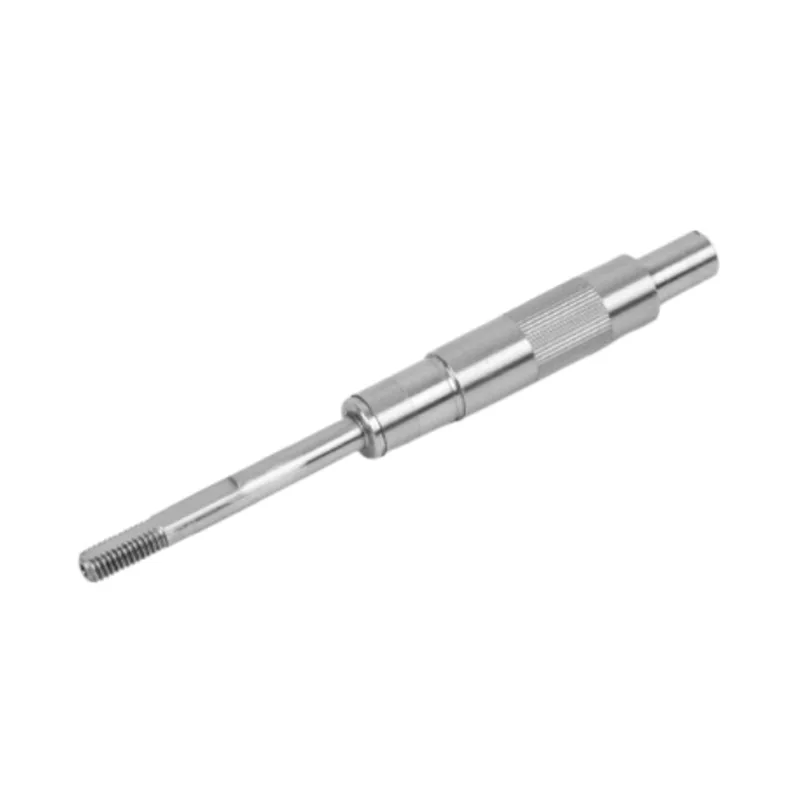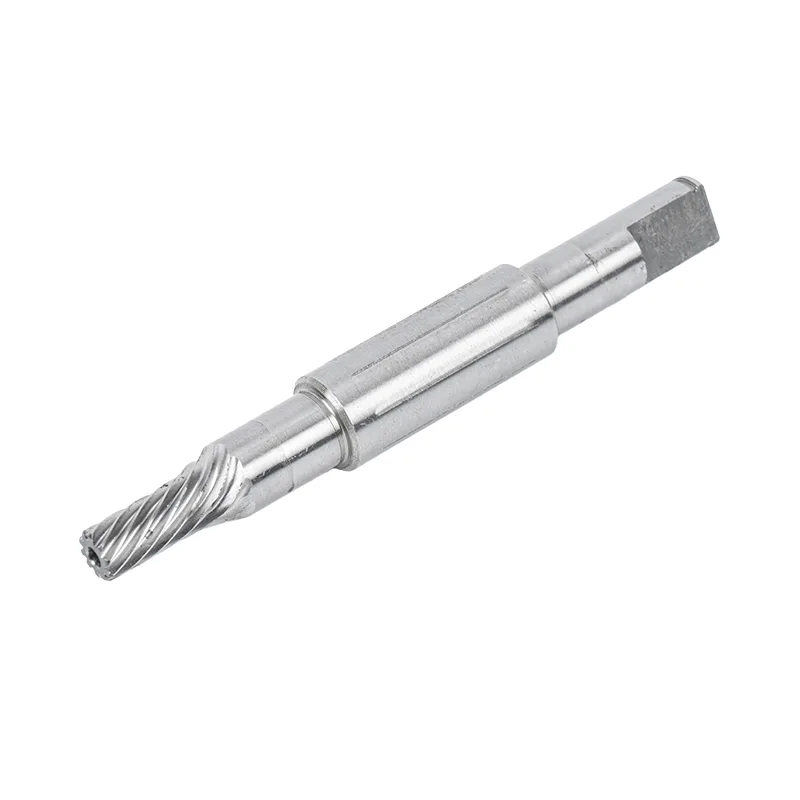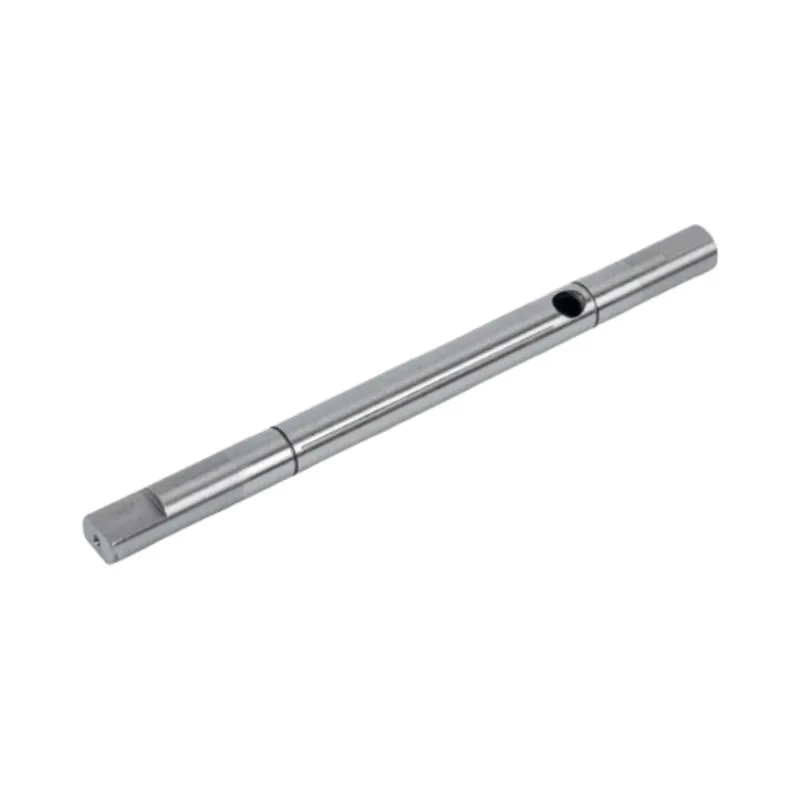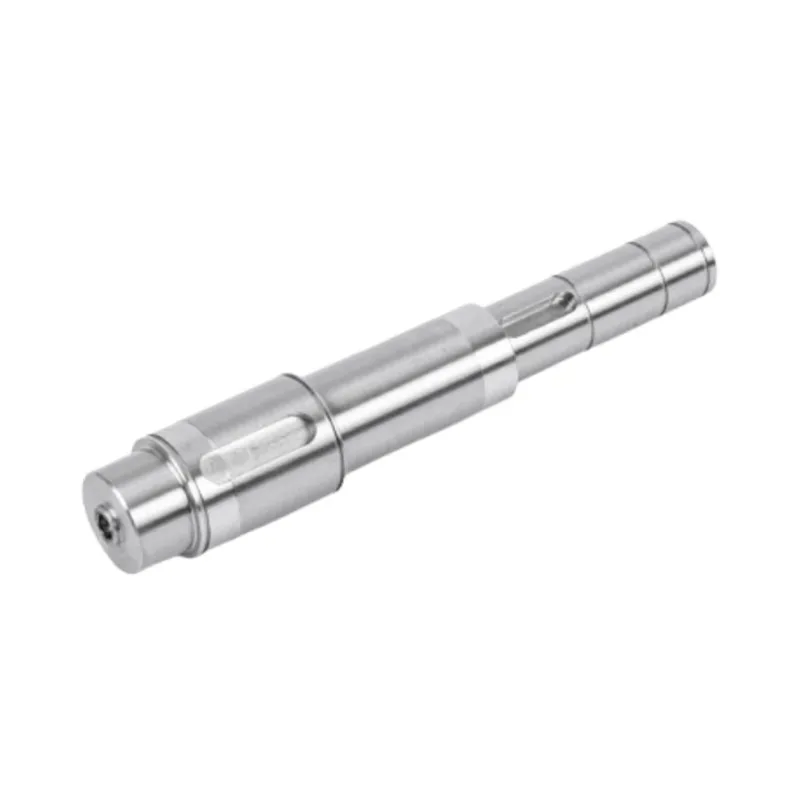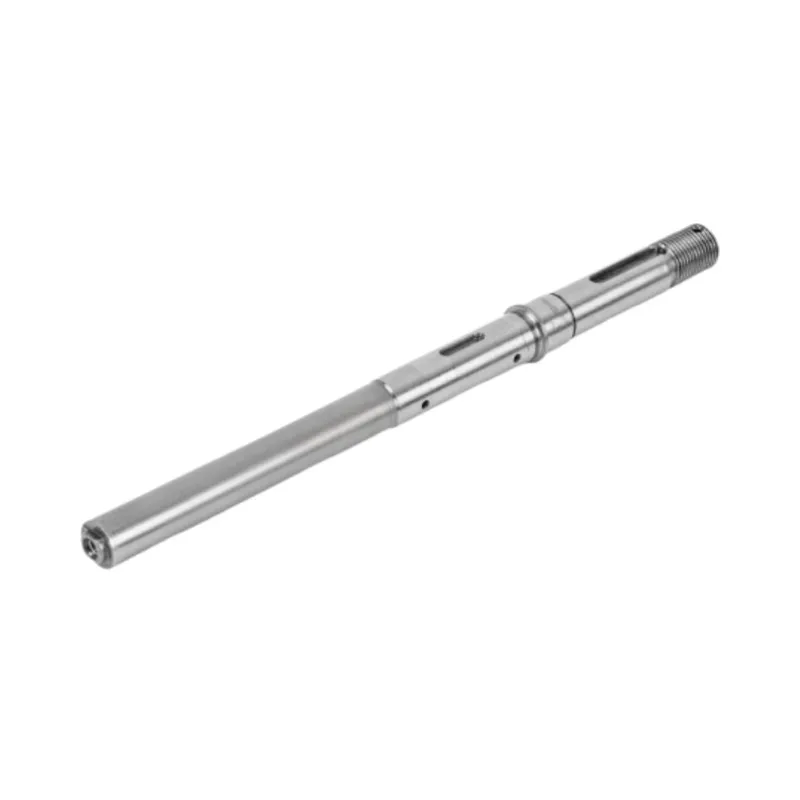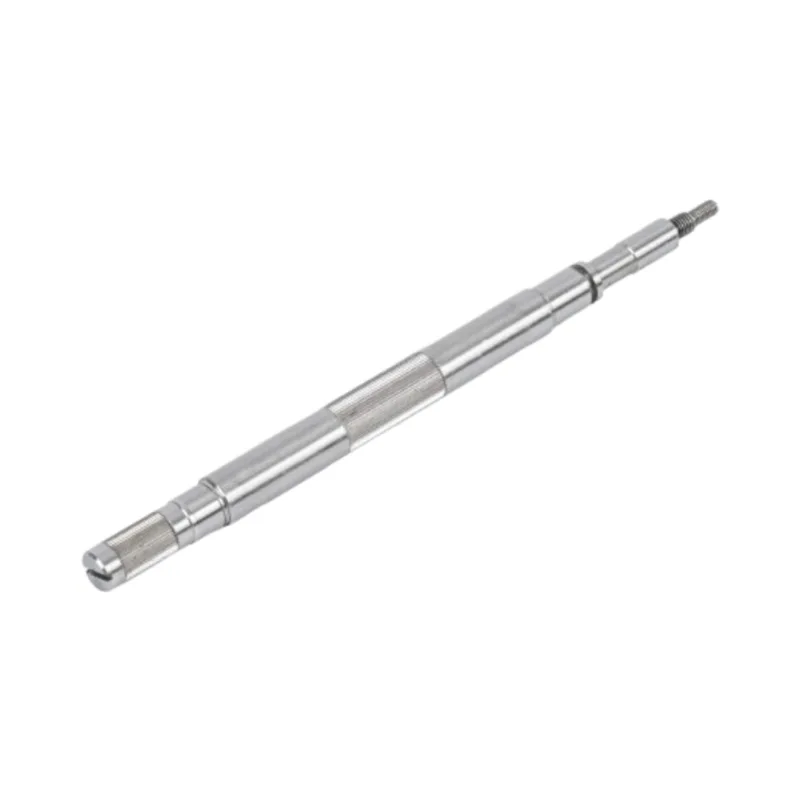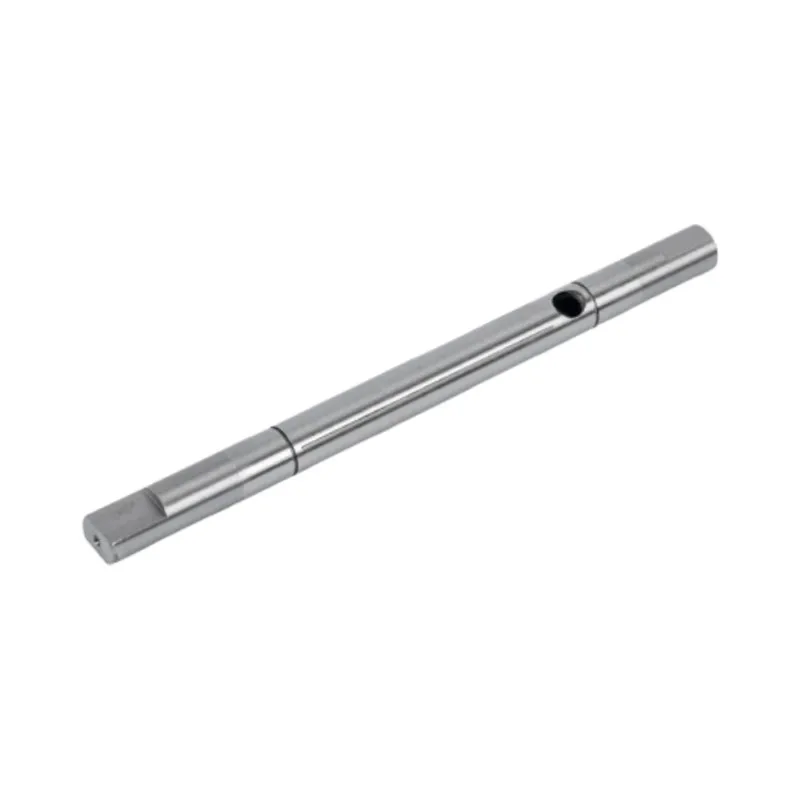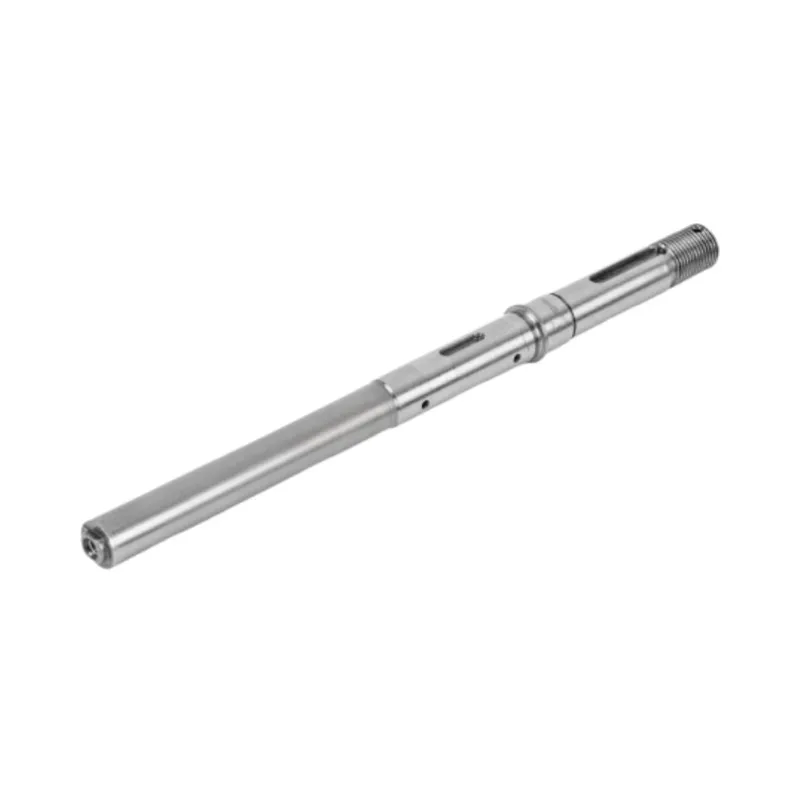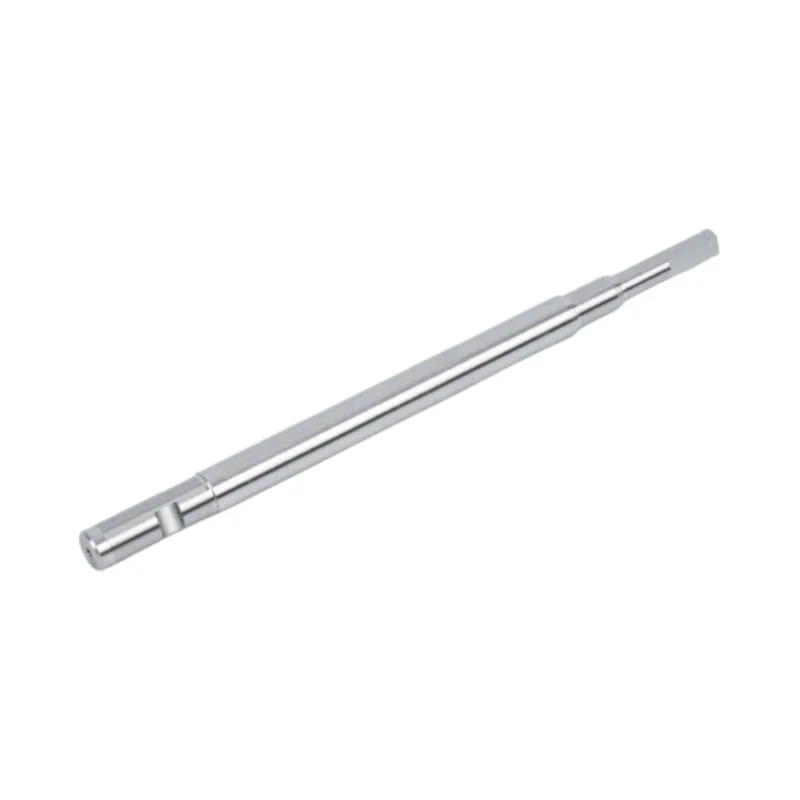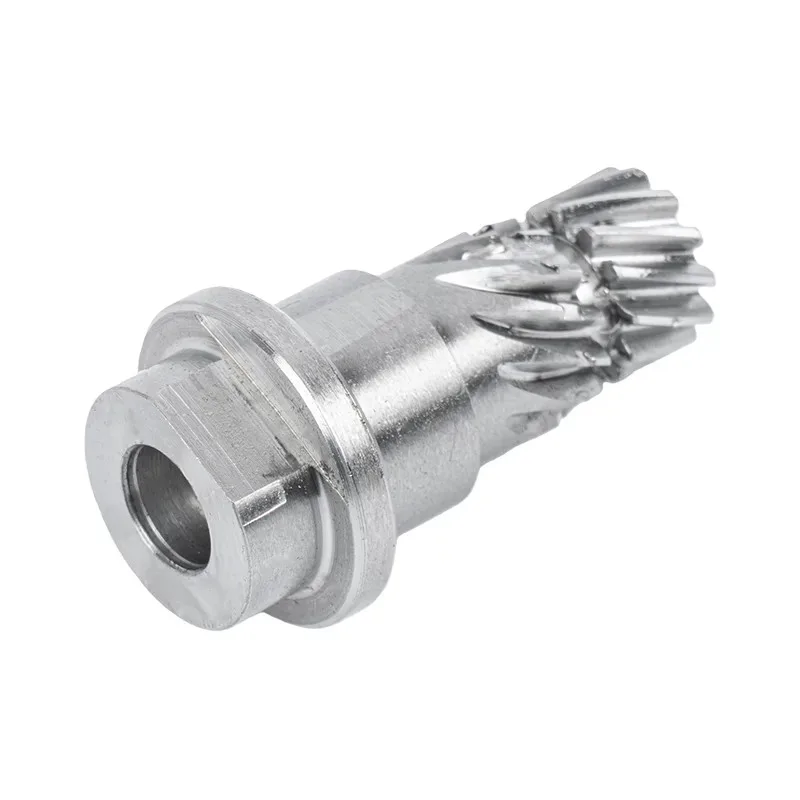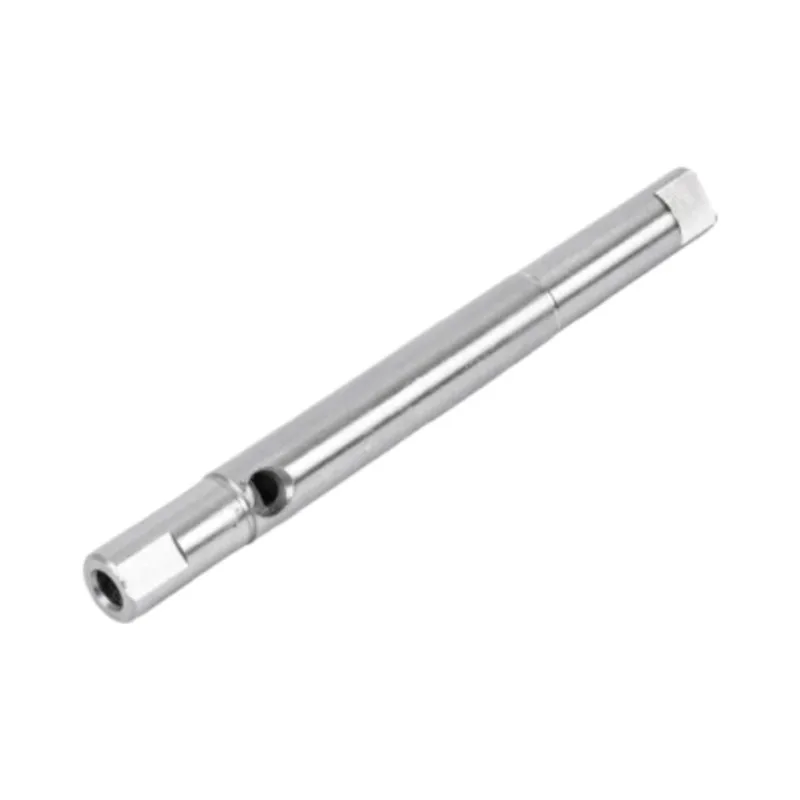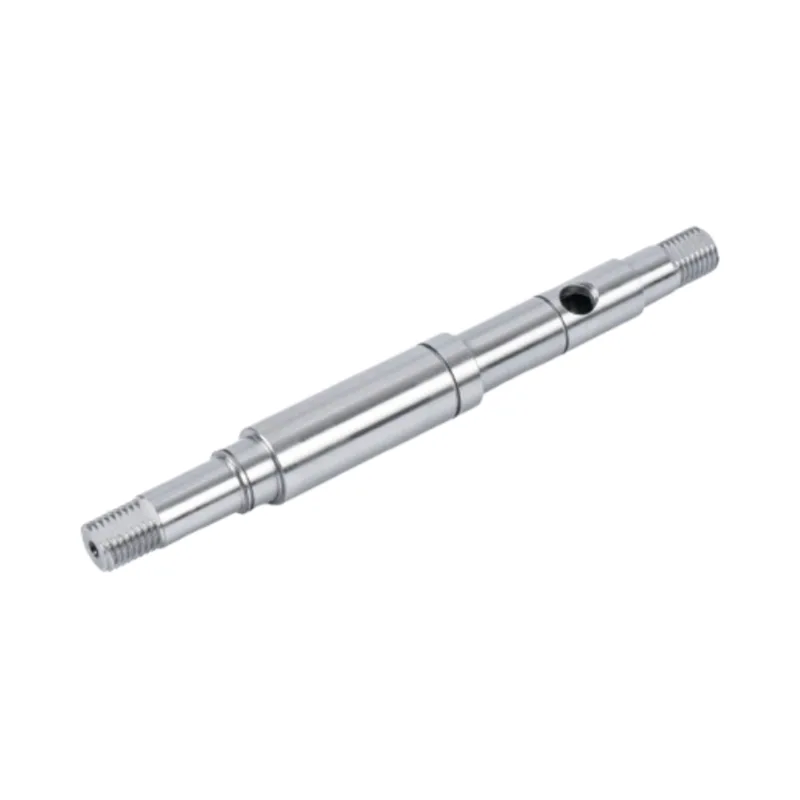

The tighter tolerance does not choose the grinding method. The shaft geometry does. A plain diameter that can pass continuously through a centerless grinder is a different manufacturing problem from two bearing journals that must remain concentric across a shoulder.
Choose cylindrical grinding for stepped, shouldered and multi-diameter motor shafts when several journals must stay true to one axis. Choose centerless grinding for long, plain shafts when one consistent outside diameter and efficient batch flow are the main requirements. Some production routes use both: centerless grinding handles a plain body efficiently, then cylindrical grinding finishes critical bearing or seal journals in relation to the shaft axis.
The obvious buyer question is which process is more precise. The tolerance alone cannot answer it. Both processes can produce precision shaft diameters. The useful distinction is how the part is held, which surfaces must relate to one another, and whether the geometry can move through the machine without interruption.
That choice changes the quotation and setup, as well as what the inspection report should prove. A supplier who selects the method from a single diameter may miss the feature that actually controls the motor assembly.
Start with geometry, not a tolerance number
Consider two drawings that both call for the same finished diameter and surface roughness. The first is a long smooth shaft with one continuous outside diameter. The second has two bearing journals, a shoulder, a seal land and a smaller extension. They may share a tolerance, but they do not share a grinding problem.
The smooth shaft gives the factory a continuous surface. It can rest between a grinding wheel and a regulating wheel while a work-rest blade supports it. The stepped shaft cannot pass through that setup in the same way. Its journals need to be finished one section at a time, with the part located from centers or another defined axis.
When a drawing reaches our desk, we circle the bearing and seal journals before we look at the general tolerance block. Those surfaces tell us how the shaft works. The grinding route should protect their size, finish and relationship to the working axis.
How the two grinding methods support the shaft
Workholding changes what the process controls
The diagrams are simplified. Their purpose is to show why workholding, rather than a marketing claim about accuracy, drives the process choice.
In cylindrical grinding, the shaft rotates around its center axis while the wheel approaches a selected journal. This lets the grinder work across steps and shoulders and preserve the relationship between separate diameters.
In centerless grinding, the shaft has no center support. It rests on a blade between the grinding wheel and regulating wheel. The arrangement is well suited to a continuous outside diameter because the part can move through the grinding zone without being clamped between centers.
Cylindrical vs centerless grinding comparison
| Decision factor | Cylindrical grinding | Centerless grinding | What the buyer should notice |
|---|---|---|---|
| Part support | Part is located from centers and rotated around a defined axis. | Part rests on a work-rest blade between two wheels. | The support method determines which geometric relationship the process controls. |
| Typical geometry | Stepped, shouldered and multi-diameter shafts. | Long, plain shafts with a continuous outside diameter. | A tight tolerance does not make an unsuitable geometry fit a centerless process. |
| Center holes | Normally uses center locations for the grinding axis. | No center holes are needed for support. | Do not remove center features from the design before the process route is agreed. |
| Strongest control | Concentricity and runout relationships between separate journals. | Consistent size along a plain outside diameter. | Choose the method around the functional surface, not the easiest dimension to measure. |
| Production flow | Each journal is approached and finished as part of a defined setup. | Supports fast, continuous feed for suitable shaft forms. | Centerless speed creates value only when the geometry permits it. |
| Common motor shaft fit | Bearing journals, seal lands, shoulders and stepped shafts. | Smooth motor shafts and long plain sections. | One drawing may justify a combined route. |
Neither column is a quality grade. A buyer may write "centerless grinding required" because the project needs volume, then send a part whose shoulder and journal layout calls for axis-based grinding. A plain shaft can also inherit a slower route when its drawing template was copied from a stepped part. The drawing should define the result. The factory should choose the route that can repeat it.
When cylindrical grinding is the better choice
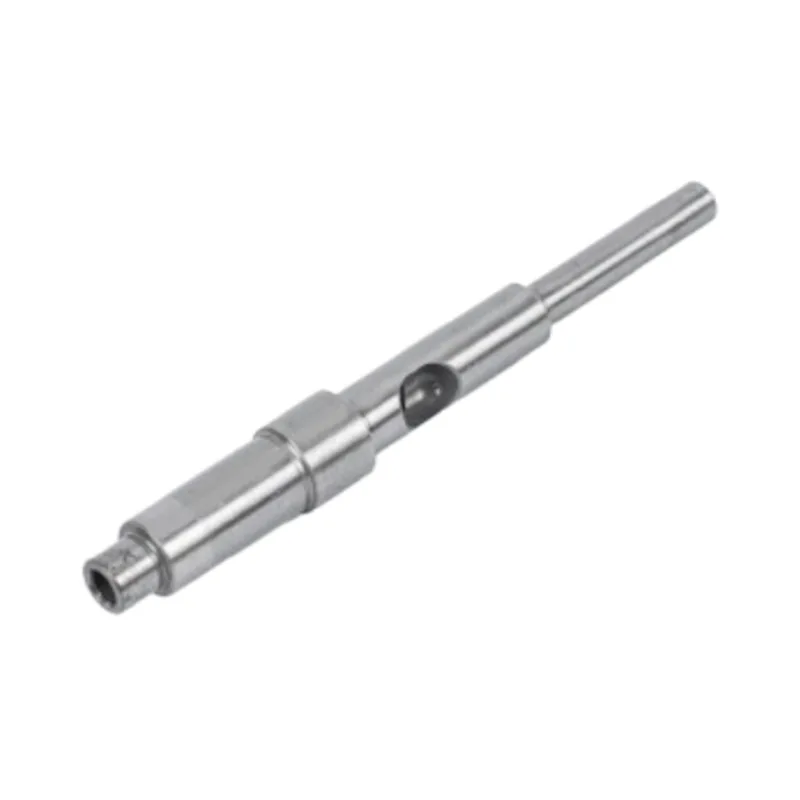
Cylindrical grinding makes sense when the shaft has several functional diameters. A bearing journal may sit next to a shoulder, followed by a seal surface and a smaller drive end. The diameters can all pass their individual size checks and still produce a poor assembly if their axes do not agree.
An RFQ that lists diameter tolerance but omits the datum relationship between journals is incomplete. Diameter is a local measurement. Runout and concentricity describe relationships. A cylindrical grinder can finish one journal while the shaft rotates around the same reference established for the other journal.
We normally favor this route when the drawing includes:
- two or more critical diameters separated by steps or shoulders;
- bearing and seal journals that must remain true to the same axis;
- features that prevent a continuous pass through a centerless setup;
- a runout requirement tied to defined centers or journal datums;
- small production volumes where geometry matters more than continuous feed.
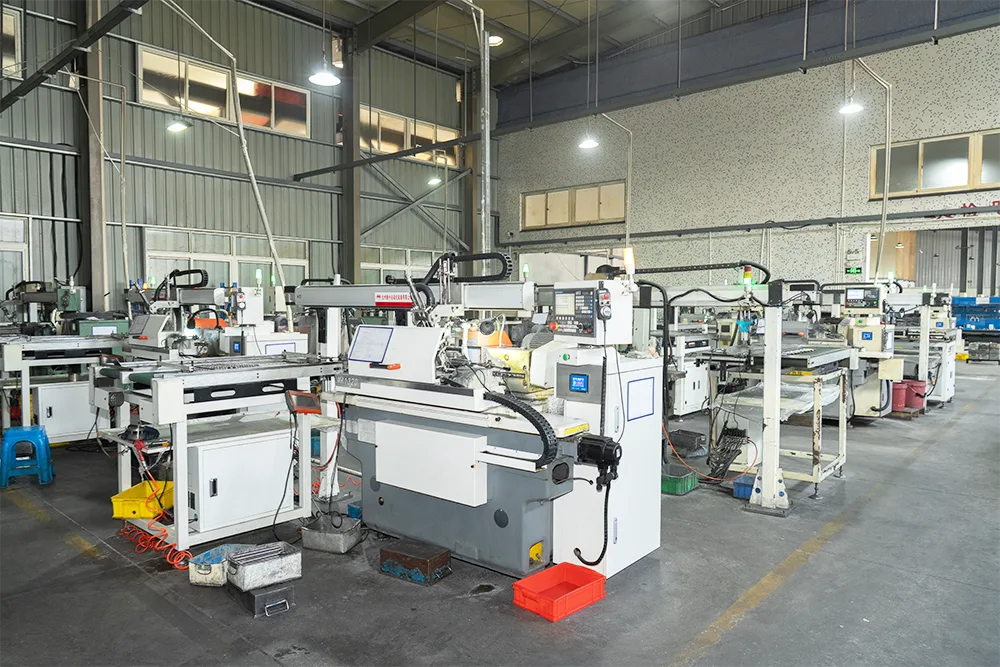
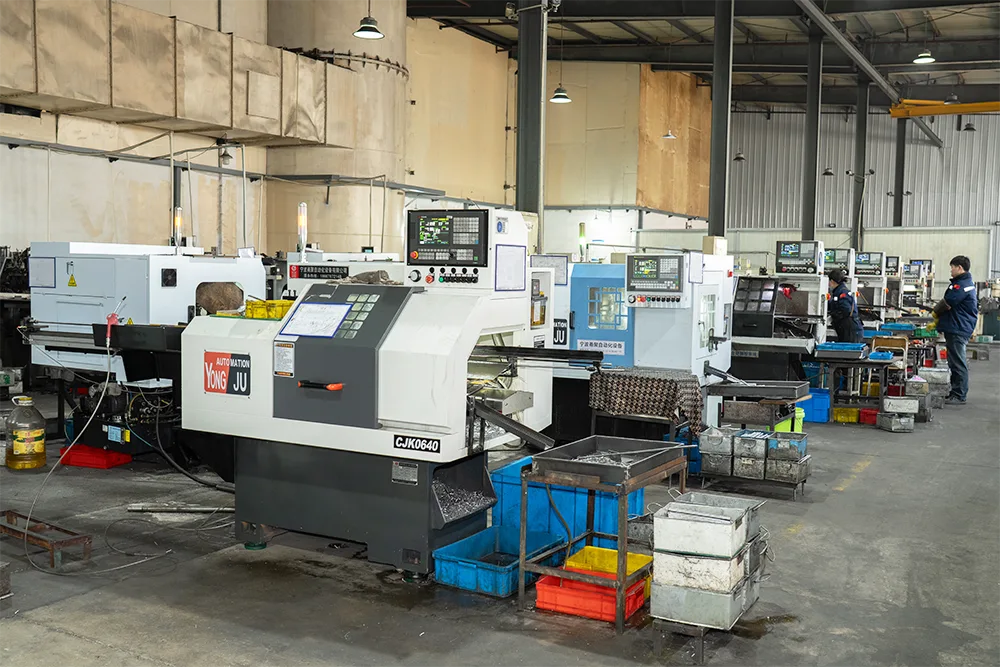
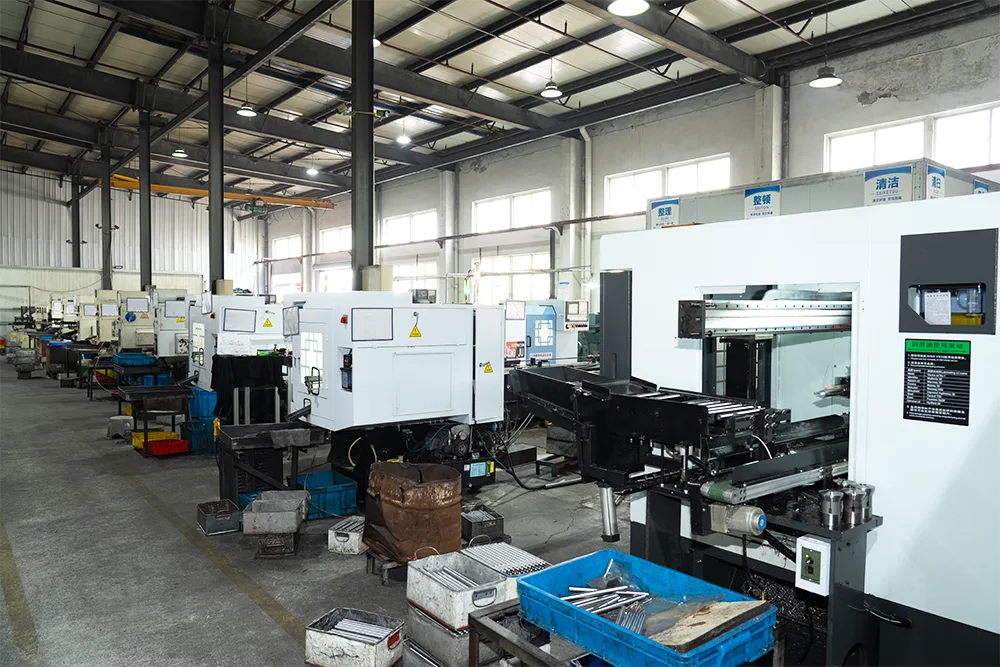
Guanshuo uses cylindrical grinding for stepped and shouldered shafts in its current shaft machining workflow. The factory operates 26 CNC cylindrical grinders, so this is a core production process rather than an outsourced finishing step.
When centerless grinding earns its place
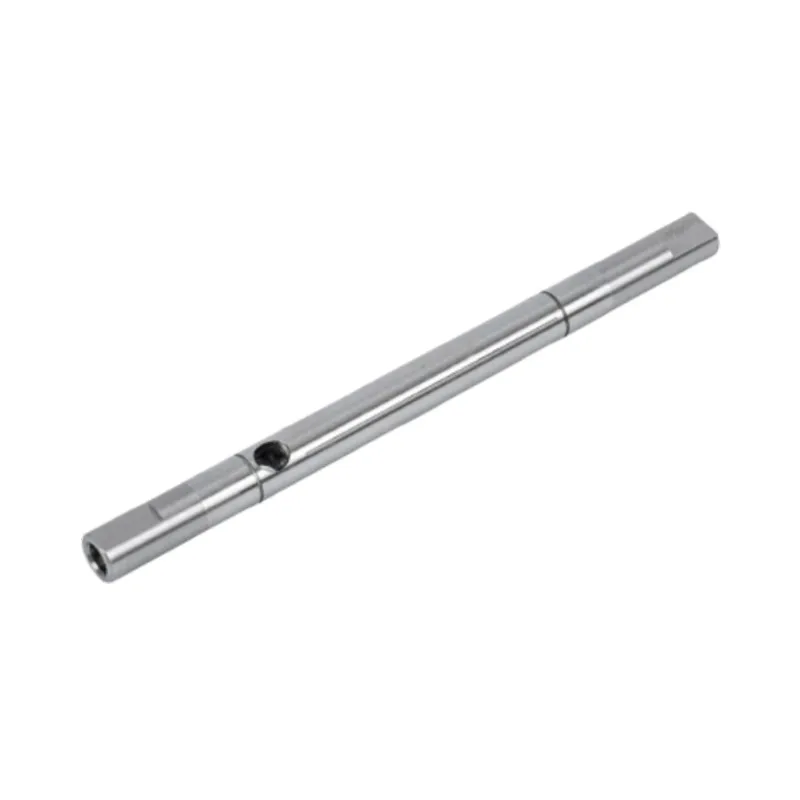
Centerless grinding is attractive when the shaft geometry stays plain. The work-rest blade supports the part close to the grinding zone, and the process does not need center holes to carry the shaft. It is a practical way to hold one diameter along a long, slender part while maintaining efficient production flow.
We look for three conditions before we recommend it: a continuous grinding surface, a diameter that is functionally important along its length, and a quantity that benefits from the setup. If a shoulder interrupts the pass or several journals must be tied to a center axis, the apparent throughput advantage can disappear.
Guanshuo operates 6 high-precision centerless grinders. The precision-ground smooth motor shaft page lists IT5 to IT6 dimensional accuracy, surface roughness down to Ra 0.4 micrometers and straightness within 0.01 mm for that product line. Those values describe the finished smooth shaft product. A different geometry still needs its own drawing review.
Fast material flow does not mean casual process control. Wheel condition, the regulating action, work-rest support and incoming stock all affect the finished diameter. The process is efficient because the setup suits the part, not because the part receives less attention.
A factory decision flow for motor shafts
We use the complete drawing, but the following flow shows the order of questions. It prevents a team from choosing a machine first and forcing the part into that choice afterward.
Grinding route selection
Read the complete shaft drawing
Mark journals, shoulders and functional datums.
Multiple critical diameters, steps or shoulders?
If yes
Cylindrical grinding path
If a long plain body also benefits, review a combined route.
If no, continue
Long, plain, continuous outside diameter with useful batch flow?
If yes
Centerless grinding path
If no
Review the route with the drawing
Use cylindrical, centerless or both where each fits.
The flowchart is a planning aid. Material condition, heat treatment, grinding allowance and the inspection datum still belong in the final process review.
When one shaft uses both methods
One shaft may need more than one grinding method. If it has a long plain body plus smaller functional journals, centerless grinding may establish the plain diameter efficiently. Cylindrical grinding can then finish the journals that need a direct relationship to the center axis.
A smooth section alone does not make the whole component suitable for centerless grinding. An interrupted feature may prevent a continuous pass. We would rather split the process where the geometry changes than compromise the surfaces that locate the motor assembly.
| Shaft condition | Likely primary route | Reason | Inspection focus |
|---|---|---|---|
| One long, uninterrupted diameter | Centerless grinding | Continuous support and efficient flow suit the geometry. | Diameter consistency, straightness and roughness along the controlled length. |
| Two bearing journals across a shoulder | Cylindrical grinding | The journals must relate to one axis despite the step. | Journal sizes, runout, cylindricity and shoulder relationship. |
| Plain body with critical end journals | Combined route | Each method handles the part of the geometry it controls well. | Body size plus journal-to-axis relationship after final grinding. |
| Keyway, cross hole or interrupted surface near the grind zone | Drawing review before route selection | The interruption may affect how the part passes through or is supported. | Feature position, burr condition, local diameter and runout. |
What each process can fix, and what it cannot
Grinding is a finishing operation. It cannot repair every upstream decision. The shaft must arrive with the right material, enough grinding allowance, usable datums and heat treatment already considered. Guanshuo's station-by-station machining process leaves grinding until after heat treatment because heat can move the metal.
| Shop-floor symptom | What to check first | Process response | What grinding cannot hide |
|---|---|---|---|
| Diameter is correct but journals do not run together | Datum axis, center condition and journal sequence | Review cylindrical grinding around the functional axis. | A correct local diameter does not prove concentric journals. |
| Size changes along a long plain shaft | Incoming straightness, support, wheel condition and measurement locations | Review the centerless setup and the full controlled length. | One measurement near the end cannot describe the whole shaft. |
| Final surface still shows uncleaned areas | Grinding allowance and distortion after heat treatment | Correct the upstream stock plan before increasing finish removal. | Grinding cannot create missing stock. |
| Roughness passes but assembly vibration remains | Runout, concentricity, straightness and the assembly datums | Measure geometric relationships, not surface finish alone. | A smooth surface can still rotate around the wrong axis. |
| Heat-treated shaft needs excessive correction | Heat treatment route, pre-grind straightness and remaining stock | Review straightening before final grinding. | Removing extra material from one side may push a journal below size. |
We do not wait for the final grinder to discover that the drawing has no usable datum. During review, we decide which surfaces define rotation and which operation creates them. That discussion is usually more valuable than another decimal place added to a general tolerance.
Grinding capability and inspection at Guanshuo
Guanshuo operates 26 CNC cylindrical grinders and 6 high-precision centerless grinders. The wider equipment base includes 2 machining centers, 3 turn-mill machines and 60 other CNC machines. That mix lets the factory connect rough machining, drive features, grinding and inspection within one motor shaft route.
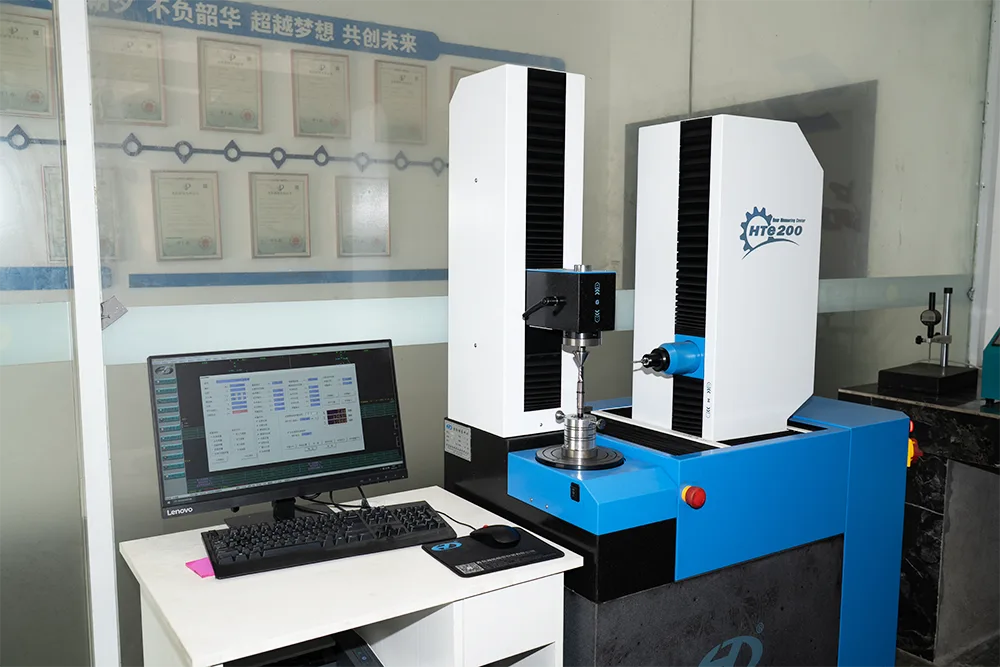
The inspection equipment includes hardness testers, two-dimensional projectors, surface roughness gauges, gear measuring centers and cylindricity gauges. The instrument has to match the question. A roughness result supports the surface requirement. A cylindricity or runout check addresses geometry. Neither substitutes for the other.
For precision-ground smooth motor shafts, Guanshuo publishes the following finished values:
| Published product characteristic | Guanshuo smooth shaft value | Inspection equipment listed on the product page |
|---|---|---|
| Surface roughness | Ra at or below 0.4 micrometers | Surface roughness tester |
| Dimensional accuracy | IT5 to IT6 grade | Two-dimensional projector and cylindricity tester |
| Straightness | At or below 0.01 mm | Cylindricity tester and gear measuring center |
Those figures are useful during early sourcing because they show the factory's published smooth shaft range. They do not replace a part drawing. A stepped, splined, hollow or special shaft has different surfaces and datum relationships, so its acceptance plan should be built around that geometry.
What to put on the drawing and RFQ
If you want comparable quotations, do not ask only for "precision grinding." Tell the factory which result matters and let the process engineer explain the route. A useful RFQ includes:
- the complete shaft drawing and current revision;
- material grade and heat treatment requirement;
- finished diameters, tolerances and grinding lengths;
- center holes, shoulders, grooves, keyways, splines and cross holes;
- the bearing, seal and rotor journals that define the functional axis;
- runout, concentricity, cylindricity, straightness and roughness requirements where each applies;
- batch quantity and expected production pattern;
- inspection locations, sampling rule and report requirement;
- any surface that must remain unground or protected.
Our preference is to receive the functional requirement and the drawing together. If a plain section needs high-volume size consistency, centerless grinding may be the right answer. If two journals must rotate on one axis, cylindrical grinding deserves more attention. If both conditions exist, we build a combined route instead of pretending one machine solves every problem.
Frequently asked questions
Which is more precise, cylindrical or centerless grinding?
Neither method is universally more precise. Cylindrical grinding is better suited to controlling the relationship between separate journals on stepped or shouldered shafts. Centerless grinding is well suited to maintaining one consistent outside diameter along a plain shaft. Precision depends on matching the process to the geometry and measuring the correct characteristic.
Can a stepped motor shaft be centerless ground?
A stepped shaft may contain a plain section that benefits from centerless grinding, but steps and shoulders can prevent a continuous pass through the centerless setup. Its critical journals are commonly reviewed for cylindrical grinding because they must remain true to a defined axis.
Does centerless grinding require center holes?
No. In centerless grinding, the shaft rests on a work-rest blade between the grinding wheel and regulating wheel. The process does not use center holes to support the part.
Can one motor shaft use both grinding methods?
Yes. A production route can use centerless grinding for a long plain body and cylindrical grinding for bearing, seal or end journals that must relate to the shaft axis. The drawing geometry and functional datums determine whether the combined route is useful.
What precision does Guanshuo publish for ground smooth motor shafts?
Guanshuo publishes IT5 to IT6 dimensional accuracy, surface roughness down to Ra 0.4 micrometers and straightness within 0.01 mm for its precision-ground smooth motor shafts. Other shaft geometries should be reviewed against their own drawings and inspection requirements.
Send the drawing with the target diameter
Guanshuo can review your shaft geometry, critical journals, heat treatment and batch requirements, then plan the cylindrical, centerless or combined grinding route around the finished function.
Send your motor shaft RFQ