
News

News

We’re committed to sharing work results, company updates, key developments, and staffing announcements with you.

We'll keep you updated on our progress, company news, timely developments, and personnel changes.

You'll receive regular updates on our performance, organizational news, ongoing developments, and leadership appointments.

We’ll share performance outcomes, important news, timely project updates, and organizational changes with you.

Stay informed about our achievements, company happenings, real-time progress, and team updates.
Cylindrical vs centerless grinding for motor shafts25 2026-08

Cylindrical vs centerless grinding for motor shafts

Choose cylindrical grinding for stepped, shouldered and multi-diameter motor shafts when several journals must stay true to one axis. Choose centerless grinding for long, plain shafts when one consistent outside diameter and efficient batch flow are the main requirements. Some production routes use both: centerless grinding handles a plain body efficiently, then cylindrical grinding finishes critical bearing or seal journals in relation to the shaft axis.
solid-vs-hollow-motor-shaft19 2026-08

solid-vs-hollow-motor-shaft

The short answer: boring a shaft removes far more weight than strength. Take out a bore half the outside diameter and you lose a quarter of the weight but only about six percent of the torsional stiffness. That trade is why hollow shafts exist, and understanding it is how you decide.
Servo and Automation Motor Shafts: The Specs That Decide Accuracy19 2026-08

Servo and Automation Motor Shafts: The Specs That Decide Accuracy

In a pump or a fan, the motor shaft only has to deliver torque. In a servo drive, a robot joint, or a CNC axis, it also has to deliver position. A few microns of runout at the shaft becomes a visible error at the end of a robot arm, and a whine the operator hears all shift. That difference changes which specs matter. This guide covers the shafts Guanshuo builds for automation, and the numbers that separate them.
Motor Shaft Materials: 1045 vs 4140 vs Stainless Steel, and How to Choose19 2026-08

Motor Shaft Materials: 1045 vs 4140 vs Stainless Steel, and How to Choose

Almost every motor shaft question ends up here: which steel? The honest answer is that there is no best grade, only a best match. A pump shaft that lives in wet air and a traction shaft that reverses torque a thousand times an hour fail in completely different ways. This guide compares the grades Guanshuo actually runs, and gives you a path to pick one.
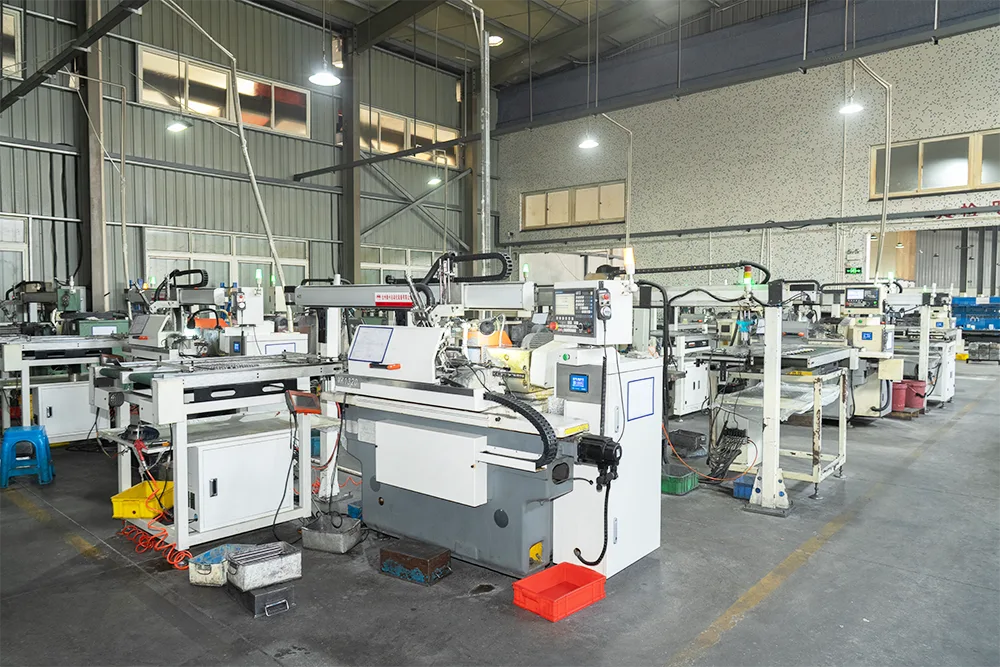
Precision Shaft Machining: Inside a Motor Shaft Factory, Station by Station19 2026-08

Precision Shaft Machining: Inside a Motor Shaft Factory, Station by Station

Precision shaft machining turns a steel bar into a finished motor shaft through six stations: material inspection, CNC turning and milling, spline or gear cutting, heat treatment, precision grinding, and final inspection. Grinding always comes after hardening, because heat treatment moves the metal. That sequence is what holds IT5 to IT6 tolerance, straightness within 0.01 mm, and a surface finish of Ra≤0.4 μm on the finished shaft.
5 Factors to Consider When Buying Custom Hydraulic Driven Motor Shaft18 2026-08

5 Factors to Consider When Buying Custom Hydraulic Driven Motor Shaft

Selecting the right Hydraulic Driven Motor Shaft is a critical engineering decision that directly impacts the performance, durability, and reliability of your hydraulic system. Whether you are specifying a shaft for a mobile hydraulic application, an industrial power unit, or a specialized piece of equipment, the selection process requires a thorough evaluation of multiple technical parameters. This guide explores the five essential factors that engineers and procurement professionals must evaluate when purchasing a custom Hydraulic Driven Motor Shaft.
X
We use cookies to offer you a better browsing experience, analyze site traffic and personalize content. By using this site, you agree to our use of cookies. Privacy Policy
RejectAccept